This isn't the first time we've faced a "swine flu" alarm in this country. Check out these ads from 1976 urging people to get swine flu vaccinations:
Get the message?
Last Monday I was fascinated to learn that Saint Thomas Aquinas had articulated a doctrine of implicit baptism of desire.Read the whole thing (and the comments).As stated above (1, ad 2; 68, 2) man receives the forgiveness of sins before Baptism in so far as he has Baptism of desire, explicitly or implicitly [there are the key words]; and yet when he actually receives Baptism, he receives a fuller remission, as to the remission of the entire punishment. So also before Baptism Cornelius and others like him receive grace and virtues through their faith in Christ and their desire for Baptism, implicit or explicit: but afterwards when baptized, they receive a yet greater fullness of grace and virtues. Hence in Psalm 22:2, "He hath brought me up on the water of refreshment," a gloss says: "He has brought us up by an increase of virtue and good deeds in Baptism. Yet catechumens who die without baptism can be saved but only as through fire. That is, they are absolved of eternal punishment, not temporal punishment."The perplexing thing is that Saint Thomas Aquinas believes that baptism by desire only remits eternal punishment and not the temporal punishment due to sins.
STh III, q. 69, a. 4.
I speak to you who have just been reborn in baptism, my little children in Christ... [Baptism] is a sacrament of new life which begins here and now with the forgiveness of all past sins, and will be brought to completion in the resurrection of the dead. You have been buried with Christ by baptism into death in order that, as Christ has risen from the dead, you also may walk in newness of life...This is an octave. Augustine here demonstrates the great significance of the number eight as a sign of redemption and new life as well as resurrection, as our own resurrection is secured by Christ's, in whose body we are incorporated by way of our baptism by water and the Spirit. Baptism into Christ is thus intrinsically linked to resurrection.
This is the octave day of your new birth. Today is fulfilled in you the sign of faith that was prefigured in the Old Testament by the circumcision of the flesh on the eight day after birth. When the Lord rose from the dead, he put off the mortality of the flesh; his risen body was still the same body, but it was no longer subject to death. By his resurrection he consecrated Sunday, or the Lord's day. Though the third after his passion, this day is the eighth after the Sabbath, and thus also the first day of the week.
And so your own hope of resurrection, though not yet realized, is sure and certain, because you have received the sacrament or sign of this reality, and have been given the pledge of the Spirit.

But for us a new day has dawned: the day of Christ's Resurrection. The seventh day completes the first creation. The eighth day begins the new creation. Thus, the work of creation culminates in the greater work of redemption. The first creation finds its meaning and its summit in the new creation in Christ, the splendour of which surpasses that of the first creation.And a blessed Pascha to my Eastern Orthodox readers!
“In our tumultuous and troubled times, when man is susceptible to various afflictions and temptations,” the Patriarch continued, “we must especially come running to Christ’s Chalice and reverently eat of the Body and Blood of the Savior for our salvation.” Today’s celebration, in the words of the Patriarch, is an invitation for us to live an active liturgical life, not as observers, but as participants...Read the whole thing.
The Patriarch then related that, in performing the rite of the washing of the feet, he had “performed an action prescribed for us by our Holy Fathers.”
“In imitation of the Savior, the Patriarch today washed the feet of priests who symbolized the twelve Apostles,” said His All-Holiness, emphasizing that this rite helps us to understand the depths of the humility of Christ, Who became man in order to save us.


Six days before the Passover, Jesus came to Bethany, where Laz'arus was, whom Jesus had raised from the dead. There they made him a supper; Martha served, and Laz'arus was one of those at table with him. Mary took a pound of costly ointment of pure nard and anointed the feet of Jesus and wiped his feet with her hair; and the house was filled with the fragrance of the ointment.
But Judas Iscariot, one of his disciples (he who was to betray him), said, "Why was this ointment not sold for three hundred denarii and given to the poor?" This he said, not that he cared for the poor but because he was a thief, and as he had the money box he used to take what was put into it.
Jesus said, "Let her alone, let her keep it for the day of my burial. The poor you always have with you, but you do not always have me."
When the great crowd of the Jews learned that he was there, they came, not only on account of Jesus but also to see Laz'arus, whom he had raised from the dead. So the chief priests planned to put Laz'arus also to death, because on account of him many of the Jews were going away and believing in Jesus. The next day a great crowd who had come to the feast heard that Jesus was coming to Jerusalem. So they took branches of palm trees and went out to meet him, crying, "Hosanna! Blessed is he who comes in the name of the Lord, even the King of Israel!" And Jesus found a young ass and sat upon it; as it is written, "Fear not, daughter of Zion; behold, your king is coming, sitting on an ass's colt!"
His disciples did not understand this at first; but when Jesus was glorified, then they remembered that this had been written of him and had been done to him. The crowd that had been with him when he called Laz'arus out of the tomb and raised him from the dead bore witness. The reason why the crowd went to meet him was that they heard he had done this sign.
Not only is Planned Parenthood in the process of remodeling what will be the largest abortion center in the Western Hemisphere here in Houston, but they are also having their national convention here the last week of March!The group will gather in the parking lot on Jackson which is directly behind Annunciation Catholic Church at 1618 Texas Ave. at 6:00 PM and walk in a procession. Pro-lifers from every denomination are invited and encouraged to participate.
That means hundreds of Planned Parenthood employees from around the country will be here in Houston.
On Friday March 27th, Planned Parenthood will have their 2009 Gala and Annual Awards ceremony at the George R. Brown Convention Center. They will be honoring Hillary Clinton.
Don't stay home on Friday, March 27th! We need you to join us in a prayer vigil on the sidewalk across the street from the George R. Brown.

You, O Mary, have been made a book in which our rule is written today. In you today is written the eternal Father’s wisdom; in you today our human strength and freedom are revealed...Fiat mihi secundum Verbum tuum.
O Mary, I see this Word given to you, living in you yet not separated from the Father–just as the word one has in one’s mind does not leave one’s heart or become separated from it even through that word is externalized and communicated to others. In these things our human dignity is revealed–that God should have done such and so great things for us.
And even more in you, O Mary, our human strength and freedom are today revealed, for after the deliberation of such and so great a council, the angel was sent to you to announce to you the mystery of the divine counsel and to seek to know your will, and God’s Son did not come down into your womb until you had given your will’s consent. He waited at the door of your will for you to open to him; for he wanted to come into you, but he would never have entered unless you had opened to him, saying, “Here I am, God’s servant; let it be done to me as you have said.”
The eternal Godhead, O Mary, was knocking at your door, but unless you had opened that door of your will God would not have taken flesh in you. Blush, my soul, when you see that today God has become your relative in Mary. Today you have been shown that even though you were made without your help, you will not be saved without your help.
O Mary, My tenderest love! In you is written the Word, from whom we have the teaching of life. You are the tablet that sets this teaching before us.
In essence, Facebook users didn’t think they wanted constant, up-to-the-minute updates on what other people are doing. Yet when they experienced this sort of omnipresent knowledge, they found it intriguing and addictive. Why?Why, indeed? And what does one do with all of that knowledge?
Social scientists have a name for this sort of incessant online contact. They call it “ambient awareness.” It is, they say, very much like being physically near someone and picking up on his mood through the little things he does — body language, sighs, stray comments — out of the corner of your eye. Facebook is no longer alone in offering this sort of interaction online. In the last year, there has been a boom in tools for “microblogging”: posting frequent tiny updates on what you’re doing. The phenomenon is quite different from what we normally think of as blogging, because a blog post is usually a written piece, sometimes quite long: a statement of opinion, a story, an analysis. But these new updates are something different. They’re far shorter, far more frequent and less carefully considered.Yes, far, far less carefully considered. Writing a blog post takes some time, reflection, and analysis (not including those blogs prone to constant axe-grinding, which I make a point of avoiding and encourage others to do so as well). On the other hand, micro-blogging takes no time at all. I quickly saw how easily the most reasonable people post not only about the meaningless details of the day, but also their many erratic frustrations with the people and events of their life and life in general, including politics and religion. One friend proclaims, "The pope is an idiot!" Another proclaims, "Obama is an idiot!" And another, "Palin is an idiot!" It wears on a person after a while.
For many people — particularly anyone over the age of 30 — the idea of describing your blow-by-blow activities in such detail is absurd. Why would you subject your friends to your daily minutiae? And conversely, how much of their trivia can you absorb? The growth of ambient intimacy can seem like modern narcissism taken to a new, supermetabolic extreme — the ultimate expression of a generation of celebrity-addled youths who believe their every utterance is fascinating and ought to be shared with the world. Twitter, in particular, has been the subject of nearly relentless scorn since it went online. “Who really cares what I am doing, every hour of the day?” wondered Alex Beam, a Boston Globe columnist, in an essay about Twitter last month. “Even I don’t care.”"Modern narcissism". I like that description. Posting my opinions gave me a sense of value, as though the details about what I ate for lunch that day were really that interesting. But it adds up:
Indeed, many of the people I interviewed, who are among the most avid users of these “awareness” tools, admit that at first they couldn’t figure out why anybody would want to do this.
Each little update — each individual bit of social information — is insignificant on its own, even supremely mundane. But taken together, over time, the little snippets coalesce into a surprisingly sophisticated portrait of your friends’ and family members’ lives, like thousands of dots making a pointillist painting. This was never before possible, because in the real world, no friend would bother to call you up and detail the sandwiches she was eating. The ambient information becomes like “a type of E.S.P.,” as [Ben] Haley described it to me, an invisible dimension floating over everyday life.And that's just it. People's lives unfold before you like a soap opera. You gain a sense of control even as a silent observer, privy to intimate life details people feel compelled to share. It seems to me that this can be good, but it can also be bad. And what are we to make of the distinction between real "friendship" and "Facebook friends", which for some, seems to be more of a popularity contest than about maintaining solid relationships with other people?
I do not intend to explain what this is all about ab initio to those who do not already know the general outlines. Just to add some facts which those who do know may not be familiar with.Read the rest of Fr. Hunwicke's reflection.
In 1995 the Pontifical Council for the Promotion of Christian Unity published a learned and interesting paper which suggested that a lack of correlation between the Greek (ekporeuesthai) and Latin (procedere) terms for "proceedeth" is part of the problem. ekporeuesthai refers to the origin of the Holy Spirit within the eternal and glorious economy of the Holy Trinity. And, since the Father is the Source (pege, aitia) of the being of the other two Persons, clearly the Spirit ekporeuetai from the Father alone. To suggest that he might ekporeuesthai from the Son as well is to posit two sources of Divinity and thus, in effect, to believe in two Gods.
Procedere, on the other hand, is a broader term. As well as sharing the meaning of ekporeuesthai, it also encompasses the Sending, within time, of the Spirit by the Son. When the Western Church was battling against Arianism, it seemed important to safeguard the full divinity of the Son by incorporating into the Creed His authentic Missio of the Spirit.
So you could argue that Filioque with ekporeuesthai is gravely erroneous because it is tantamount to polytheism, while procedere without the Filioque is dangerously suggestive of Arianism.
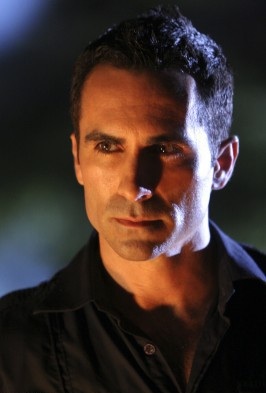
Richard Alpert is an inhabitant of The Island and is the second-in-command of The Others, a group known to the DHARMA Initiative as the "Hostiles." From his first appearance in 1954 to current events on the Island, Richard perpetually appeared to be in his 30s or 40s (making him over 80 years old), though his hairstyle and manner of dress change depending on the circumstances on or off the Island.Or, in the language of The Others (the "language of the enlightened"), Ricardus Alpert. He's the most comfortable in his own skin.
I've been in touch with a number of Catholics who were once Reformed and we've launched a new site that will examine Reformed/Calvinist theology from a Catholic point of view: Called to Communion. Obviously, our goal is to draw Reformed Christians toward the Catholic Church (ut unum sint), but we aim to avoid theological snobbery.Check it out: Called to Communion.
How did the sin of Adam become the sin of all his descendants? The whole human race is in Adam “as one body of one man”. By this “unity of the human race” all men are implicated in Adam’s sin, as all are implicated in Christ’s justice. Still, the transmission of original sin is a mystery that we cannot fully understand.All of that notwithstanding, this Eastern fellow simply explained to me that while the Immaculate Conception as it is commonly understood wouldn't necessarily make sense from an Eastern approach, Eastern Christians in union with the Church of Rome accept the Immaculate Conception fundamentally as it is articulated using a Western theology of original sin. This approach reflects a mutual, theological complementarity between East and West - truly one that breathes with both lungs.
What has just been said about the lawful variety that can exist in the Church must also be taken to apply to the differences in theological expression of doctrine. In the study of revelation East and West have followed different methods, and have developed differently their understanding and confession of God's truth. It is hardly surprising, then, if from time to time one tradition has come nearer to a full appreciation of some aspects of a mystery of revelation than the other, or has expressed it to better advantage. In such cases, these various theological expressions are to be considered often as mutually complementary rather than conflicting. Where the authentic theological traditions of the Eastern Church are concerned, we must recognize the admirable way in which they have their roots in Holy Scripture, and how they are nurtured and given expression in the life of the liturgy. They derive their strength too from the living tradition of the apostles and from the works of the Fathers and spiritual writers of the Eastern Churches. Thus they promote the right ordering of Christian life and, indeed, pave the way to a full vision of Christian truth.And moreover, the Church at the Second Vatican Council affirmed that this approach is truly and authentically Catholic:
All this heritage of spirituality and liturgy, of discipline and theology, in its various traditions, this holy synod declares to belong to the full Catholic and apostolic character of the Church. We thank God that many Eastern children of the Catholic Church, who preserve this heritage, and wish to express it more faithfully and completely in their lives, are already living in full communion with their brethren who follow the tradition of the West.Amen to that. This Holy Lent, please join me in praying for Christian unity, particularly among the apostolic churches. Lord, I believe. Help me in my unbelief.
I grew up Ukrainian Catholic and it’s a matter of fact that much of our worship had been laden with Latin elements. But over the course of time, and thanks to our great leadership in our church, we have learned where we have come from. I like the way one of our patriarchs put it, he said “We are Orthodox in Faith and Catholic in love.” In the sense that we are in full communion with the Church in Rome, but at the same time, our faith, our liturgy, the whole ethos of our church is Orthodox. And one priest in Ukraine I asked, “What do you call our church over here?” I was thinking of something else, but he came back and said, “Oh, that’s a very straightforward thing. We’re the Catholic Orthodox. They’re the Orthodox, and we’re the Catholic Orthodox.” And I thought, that really does explain who we are.Certainly, this is a very simple articulation. The history behind this relationship is much more deep and, in some cases, quite divisive within Eastern Catholicism itself. I often reflect on my many discussions with Eastern Catholics from various backgrounds. Very eye-opening. Very hopeful yet disconcerting at the same time.
From an interview on Vatican Radio, Feb 24, 2009 with Fr. Robert Ombres, O.P., who tells how the Dominicans came to Santa Sabina and why the Pope visits this Dominican Church on Ash Wednesday. Fr. Robert Ombres, O.P., a son of the English Province, is presently Procurator General of the Order of Preachers, and lives at the Priory of Santa Sabina in Rome.
Daniel Cardinal DiNardo, Archbishop of Galveston-Houston, recently urged Catholic leaders to get involved in a city-wide Bible listening campaign called You've Got The Time Houston.
Faith Comes By Hearing, the world’s foremost Audio Bible ministry, is coordinating this effort to reach every Houstonian with God’s Word in audio.
Morgan Jackson, international director for Faith Comes By Hearing, says the initial response has been remarkable.
So far more than 50 different parishes have signed up to listen through the entire New Testament, which represents more than 160,000 Catholics.
“The Archdiocese of Galveston-Houston has planned an extensive Bible engagement effort for 2009 called Word of God in the Life and Mission of the Church. Faith Comes By Hearing’s 40-day Bible listening is a big component of their outreach,” said Jackson.
“I believe Cardinal DiNardo’s support of this Bible listening program is an invigorating demonstration of his leadership to Pope Benedict’s declaration of 2009 as The Year of God’s Word,” said Jackson. “His active encouragement of this program is giving many Catholics new opportunities to study the sacred Scriptures, deepen their faith and increase their knowledge of God’s Word.”
“His endorsement is an additional encouragement to many leaders from other denominations,” said Jackson.
Already, leaders from more than 100 other Houston congregations from over a dozen denominations have signed up their churches to listen through the New Testament.
Jackson expects that more than one-third of the 3,000 Houston area churches will participate in this Bible engagement outreach.

We use something called "prozimi" instead of yeast to make the bread rise. Prozimi itself is a miracle. On either September 14 (Exaltation of the Precious Cross) or on Holy Friday a bowl containing only water and flour is taken into the altar during the Gospel reading. The priest then blesses it. Afterwards our Gerondissa takes it into the kitchen and places it in the oven (the oven is not on) and leaves it there overnight. The next morning the bowl is overflowing with this "yeast". It is then separated and refrigerated in airtight containers and is used each time prosphoro is made. Every time you make a new batch of dough you tear a small piece off and set aside for next time.Check out the full recipe, complete with pictures. Almost reminds me of my Eucharistic bread recipe adventures from a few years ago.
After his earlier attempts at raising the level of spiritual life in his parish, Catechumen Vasileos (formerly Vasily, aka William, aka Guillaume, etc) wondered what more he could do to eliminate the "rampant heathenry" that he found in his parish. In his intense studies of Church history, including A Beginner's Guide to the Orthodox Church and The Early Church for Dummies, Catechumen Vasileos discovered yet another thing in his parish which didn't match up with the early church: Private confession.I think I've seen this guy's twin in Catholic circles as well ;)
"Private confession is so obviously a heretical papist latinist pan-hereticalist innovation," said Catechumen Vasileos in a recent interview, "And obviously, we can't have that!"
Thus, having identified himself as the only real true Orthodox believe in this parish of "ignorant, uneducated heathens," Catechumen Vasileos decided to heed the advice of 6th century Elder Pharmaxananos who said, "The man who can condemn sin is by far the most blessed," and help his fellow parishioners on the way to true, non-papist repentance...
To start, Catechumen Vasileos distributed information in his parish about the practice of the early Church, in which everyone confessed to each other, rather than just to the priest. He even set a date for everyone to come and confess to each other. However, when that day came, he was quite saddened to discover that no one showed up.
"Clearly, no one at my parish really cares about Orthodoxy. They don't care about repentance, they are too busy at 6pm on Wednesday evening to come to the real confession, to busy doing useless worldly things like caring for their children, working, or something stupid like that. Really, these people just have no idea what the spiritual life is like."
Catechumen Vasileos decided to take it a step further: He decided that the best way to "convict the heathens of their sins" was to do what Elder Pharmaxananos advised, and show them. And since all sins are public, he reasoned, everyone should know! Thus, Catechumen Vasileos compiled a list of sins for everyone in the parish to pass out before liturgy.
What was on the list? To quote just two items:* Alicia was spotted on July 13th at a Roman Catholic soup kitchen, helping make food for the homeless. This is clearly in violation of Canon 422 of the Synaxalion Council of Bypraxia in 1332, which forbids any contact with heretics. This woman is surely straight on the path to eternal damnation in the 13th hell, reserved for Romanist sympathizers, which we know about from the Revelation to St Phylergia of 18th century Calamaria.After having passed out his lists after Divine Liturgy last Sunday, no comment could be obtained as to the success of his efforts at bringing the parish to repentance, as Catechumen Vasileos is in the hospital with mysterious cane-shaped bruises all over his body, and an interesting loss of hearing, possibly caused by being exposed to prolonged, high-volume screaming at the hands of elderly Calamarian women.
* Zossimas was seen eating at restaurant with his mistress on a Wednesday eating meat during Lent! First off, it's Wednesday, what is he doing eating meat?? Second, it's Lent, why is he engaging in worldly activities like eating at restaurants? This man seriously needs some help with following the canons. This is just such a blatant violation, like seriously. People really need to conduct themselves in a more canonical way when on dates with their mistresses. His wife is such a pious woman too, I am sure she will be filled with godly rage when she hears that her husband was not keeping the holy fasts of the Church.
Both Darwinism, with its secular challenge to the unity of faith and reason, as well as the attempt of ID theorists to disprove evolutionary theory vindicate Pope Leo’s selection of Aquinas as the model for Catholic intellectuals. Thomism has something useful and corrective to say on both sides of the debate. At the same time, Thomism does not replace the natural sciences, or perhaps to put it better, a Thomistic intellectual synthesis includes precisely the sort of research found in the modern natural sciences that have produced so much understanding of nature. In the Thomistic view, the teachings of the faith are fully compatible with what we learn of nature through scientific research, provided we both understand those divine teachings correctly and we do our scientific research consistently and rigorously. The truth or falsity of the claim that the diversity of living species is due to some sort of evolutionary process is a matter to be settled through biological research. Whatever the outcome of this research, it can never replace the need to explain the existence of the natural world in terms of a creation ex nihilo according to God’s divine design.What does this mean for Intelligent Design? He continues (emphasis mine):
Clearly, the secular claims associated with modern Darwinism require the sort of corrective provided by Thomism. Does this mean, then, that Catholics should make common cause with ID advocates? Insofar as ID theory represents a "god of the gaps" view, then it is inconsistent with the Catholic intellectual tradition. Thanks to the insights of Aquinas and his many followers throughout the ages, Catholics have available to them a clearer and more consistent understanding of Creation. If Catholics avail themselves of this Thomistic tradition, they will have no need to resort to "god of the gaps" arguments to defend the teachings of the faith. They will also have a more complete and harmonious understanding of the relationship of the Catholic faith to scientific reason.I, too, think this approach is best when we are dealing with the abiding secularism and, indeed, atheism that is rampant in the modern, scientific world.
No one bound by worldly desires and pleasures is worthy to approach, draw near or minister to You, the King of glory. To serve You is great and awesome even for the heavenly powers. But because of Your ineffable and immeasurable love for us, You became man without alteration or change. You have served as our High Priest, and as Lord of all, and have entrusted to us the celebration of this liturgical sacrifice without the shedding of blood. For You alone, Lord our God, rule over all things in heaven and on earth. You are seated on the throne of the Cherubim, the Lord of the Seraphim and the King of Israel. You alone are holy and dwell among Your saints. You alone are good and ready to hear. Therefore, I implore You, look upon me, Your sinful and unworthy servant, and cleanse my soul and heart from evil consciousness. Enable me by the power of Your Holy Spirit so that, vested with the grace of priesthood, I may stand before Your holy Table and celebrate the mystery of Your holy and pure Body and Your precious Blood. To You I come with bowed head and pray: do not turn Your face away from me or reject me from among Your children, but make me, Your sinful and unworthy servant, worthy to offer to You these gifts. For You, Christ our God, are the Offerer and the Offered, the One who receives and is distributed, and to You we give glory, together with Your eternal Father and Your holy, good and life giving Spirit, now and forever and to the ages of ages. Amen.

