Late Teens to Mid-40's?
When I served in young adult ministry in the Santa Barbara area, we struggled a bit with how to properly define young adult in terms of age. We knew that we weren't in the same boat as 18-24 yr old folks. We knew that, for the most part (there are always exceptions), young adults in college were in a completely different state of life than those who were out in the working and professional world. We also knew that we were different from those young adults of older ages who had already established families and had very different priorities. We decided that our ministry would target young adults between the ages of 25 and 35 and who were largely not married, or at the very least, did not yet have children. As our ministry grew, we (and I, very reluctantly) extended our target age "upper bound" from 35 to 40.
Just the other day, I received an email from another young adult group in California advertising an event. Their target age was given as "late teens to mid-40s". Really? "mid-40s"? I think that's pushing it to the extreme, and I think that this is a little too wide a range for which to operate an effective ministry.
I think Bill Cork said it best when he spoke on Young Adult Ministry at last year's Fullness of Truth conference in Houston: If you call yourself a young adult, and yet you're old enough to have children who are themselves old enough to be young adults in your same group, I've got news for you: You're not a young adult. You're middle-aged.
The horror!
Saturday, October 13, 2007
Godzdogz, Reflections on the Filioque
We profess in the Nicene Creed: And I believe in the Holy Spirit, the Lord and Giver of life, who proceeds from the Father (and the Son)... The phrase and the Son (Latin: filioque) has been the subject of intense controversy through the centuries between Eastern and Western Christianity.
The Godzdogz blog of the English Dominican Province offers a reflection on the Filioque controversy:
We profess in the Nicene Creed: And I believe in the Holy Spirit, the Lord and Giver of life, who proceeds from the Father (and the Son)... The phrase and the Son (Latin: filioque) has been the subject of intense controversy through the centuries between Eastern and Western Christianity.
The Godzdogz blog of the English Dominican Province offers a reflection on the Filioque controversy:
This phrase is misleadingly simple. The controversy it generated – usually referred to by its Latin form, Filioque – occasioned the first great schism in Christianity between the churches of the Latin West, which accepted its inclusion in the creed, and the churches of the (largely) Greek East, which did not. What was disputed concerned who God has revealed Himself to be.What is also interesting is something John Allen brought to our attention back in 2003:
The New Testament texts that speak of the relationship between the Spirit and the Son are concerned with God’s act of revelation in the Word incarnate; even John 15:26:When comes the Paraclete whom I will send to you from the Father, the Spirit of Truth, which from the Father proceeds, that one will testify about me.This of course is the reference par excellence in favour of the procession of the Spirit from the Father alone; but the word “alone” is not found in this text; rather what it deals with is the temporal mission of the Paraclete. The Latin Fathers appealed frequently to two other texts in John: 16:14-15:That one [the Spirit of Truth] me will glorify, because of mine he will receive and will announce [it] to you. All things which has the Father mine are. Therefore I said that of mine he receives and will announce [it] to youand 20:22:And this having said he breathed on [them] and says to them receive [the] Holy Spirit.If we are sons able to call God ‘Father’ that is because we have received the Spirit of his Son. Hilary of Poitiers thought that ‘of mine he will receive’ (Jn 16:14) might have the same meaning as ‘proceeds from the Father’ (De Trin. VIII, 20), while Augustine and Anselm believed that the breathing on the disciples (Jn 20:22) implied the procession of the Spirit from the Son.
The source of Latin reflection on the mystery of the Trinity was largely Augustine who developed his teaching by a rigorous exegesis of scripture. Here he is quoting himself (Tr. In Joh. Evang.99, 8-9):I had been teaching from the evidence of the holy scriptures that the Holy Spirit proceeds from them both. I then went on to say: So if the Holy Spirit proceeds from both the Father and the Son, why did the Son say He proceeds from the Father (Jn 15:26)? Why indeed, do you suppose, unless it was the way he was accustomed to refer even what was his very own to him from whom he had his very self? For example, that other thing he said, My teaching is not mine, but his who sent me (Jn 7:16). If in this case we can accept that it is his teaching, which he says however is not his but the Father’s, how much more should we accept in our case that the Holy Spirit proceeds also from him, seeing that he said He proceeds from the Father without also saying ‘He does not proceed from me’?The doctrine that the Holy Spirit proceeds from both the Father and the Son began to be proclaimed as official church teaching in the church of Spain. It was regarded as a necessary counter to a kind of Arianism prevalent among the ruling Visigoths, which regarded the Holy Spirit as a creature of the Son just as it regarded the Son as a creature of the Father. The aim of the church there was to safeguard the consubstantiality of the Word incarnate with the Father. The Spanish church’s doctrine was shared by the churches of France and England, where by the late eighth century the term Filioque is found in the creed recited at Mass each Sunday, and where moreover it was assumed that the word had always been part of the creed of Nicaea. Things rapidly became polemical, for political as well as theological reasons. In 1014 the Roman church, under pressure from the Bavarian emperor, introduced the Frankish creed, containing the Filioque, into the Mass. When the definitive break with Constantinople occurred exactly forty years later the difference over the Filioque was one of the central points of dispute.
The fundamental Orthodox objection seems to be that it is a mistake to think of the persons of the Trinity as constituted by the relationships of their origins: their distinctness as hypostases is prior to their relationships; somehow, both the distinctness and the unity of the three hypostases are derived from the first person, the Father, who is the sole beginning and the only cause of divinity, which he communicates wholly to the Son and to the Holy Spirit. Furthermore, the inter-personal relationships of the three are richer and more dynamic than just considering their relationship in terms of origin allows – summed up in the Greek term perichoresis – in terms of which modern Orthodox theologians explain statements of the Greek Fathers that the Holy Spirit proceeds from the Father through the Son. Aquinas decided that we can also say this, with suitable qualifications: it is a way of stating, he says, what Augustine held, that the Son receives from the Father the power of being joint origin or ‘breather forth’ of the Holy Spirit; further, he saw it as a gesture of goodwill towards the Greek position. The concern in the West is that to omit the Filioque is to play down the fact that to name the Holy Spirit is to name not only the Father but also the Son, for the Spirit is necessarily constituted within their relationship and so related to both. The one God is the Father begetting the Son in the love of the Spirit and the Son loving the Father in the same Spirit in whom he is lovingly begotten. The Son and Spirit are both ‘God of God’ and the point of the doctrine of the Filioque is to remind us of this teaching.
Fr. Johannes Grohe, an Opus Dei priest who teaches church history at Santa Croce, spoke on the history of church councils. He offered several interesting nuggets, such as the fact that a regional council in Persia in 410 produced one of the earliest insertions of the famed "filioque" clause into the Creed, specifying that the Holy Spirit proceeds from the Father "and from the Son." This council, as Grohe points out, was an Eastern affair, and its adoption of the filioque came out of the rich theological reflection of early Persian Christianity. Hence the notion that the filioque is solely an imposition of the medieval Western Church upon the East, born of later controversies between Rome and Byzantium, is historically dubious.Meanwhile, dialog moves forward...
Chesterton in Santa Barbara
Well, close anyway. From the Westmont College Office of Public Affairs:
I also understand that Dale Ahlquist will be speaking at UC Berkeley on Sunday, October 21, 2007 at 7:00 P.M. in Room 166 of Barrows Hall. He will be speaking about, "The Art of Thinking: G.K. Chesterton on How to Use Your Brain for Its Intended Purpose."
Well, close anyway. From the Westmont College Office of Public Affairs:
Influential early 20th century English writer G.K. Chesterton will be the focus of a talk at Westmont Thursday, Oct. 18. Dale Ahlquist, president of the American Chesterton Society, will deliver a free lecture, “An Introduction to G.K. Chesterton,” in Hieronymus Lounge at 7 p.m.This is especially interesting since Westmont is a private college of the evangelical Protestant tradition. And I had no idea that there was an ACS chapter at Westmont.
A group of Westmont alumni and friends who began a chapter of The Chesterton Society in Santa Barbara in 2003 are sponsoring the event.
“We were inspired by the Christian apologist G.K. Chesterton to pursue a modest goal of reading great literature and contemplating the human condition,” says Rich Dixon, a founding member of the group and 1992 Westmont alumnus. “His more than 100 books remain timeless in their humor, wonder, and use of paradox and cover a range of genres, including poetry, history, literary criticism, economics, philosophy and politics.”
Chesterton’s most well-known works include “Orthodoxy,” “Heretics” and “Everlasting Man.”
Ahlquist is the creator and host of the “Apostle of Common Sense” television series on EWTN, Eternal Word Television Network. He has spoken at Yale, Columbia, New York, Pennsylvania and Villanova Universities and many others venues around the world. His books “G.K. Chesterton - The Apostle of Common Sense” and “Common Sense 101: Lessons from G.K. Chesterton” will be available for purchase.
I also understand that Dale Ahlquist will be speaking at UC Berkeley on Sunday, October 21, 2007 at 7:00 P.M. in Room 166 of Barrows Hall. He will be speaking about, "The Art of Thinking: G.K. Chesterton on How to Use Your Brain for Its Intended Purpose."
Friday, October 12, 2007
Fun with Uncle Gilbert
We recently subscribed to Gilbert Magazine, published by the American Chesterton Society. We received the first issue a few weeks ago, and so far, we love it! The magazine is jammed packed with solid Catholic thought, literature, and a love of good beer! And we're still making our way through this issue...
We recently subscribed to Gilbert Magazine, published by the American Chesterton Society. We received the first issue a few weeks ago, and so far, we love it! The magazine is jammed packed with solid Catholic thought, literature, and a love of good beer! And we're still making our way through this issue...
Thursday, October 11, 2007
Christ, the answer
Today, I saw some good observations from Chris Burgwald:
There is a cure for anger and resentment... do you know what, or rather whom, it is? It is Christ, whom St. Paul says came and preached peace to [those] who were far off and peace to those who were near. Only He can set us free. What a gift we have in Him! He comes to us and desires the darkest part of our being, the deepest reaches of our soul, offering His very self in its place. I hope that this former Catholic understands that we are right there with him. We love him and miss him, and we will be there to welcome him and his family home. May the peace of Christ be with him.
Today, I saw some good observations from Chris Burgwald:
A fellow blogger used the occasion of San Francisco's archbishop giving Holy Communion to two transvesite men dressed as nuns to state the following:Thanks, Chris...Wake up, folks! This is the reality of the Church of John Paul II and Benedict XVI. Conservative Catholics longed for change, thought that these men would bring it, and what have they received? This.Said blogger (a former Catholic) proceeded to quote Revelation 18:1-5, implying none too subtly that the Catholic Church is the Babylon of St. John's vision.
Here was my comment in response, which (for reasons inscrutable to me) didn't make the moderation cut:"Lord, to whom shall we go? You have the words of eternal life."
I stopped fretting about the sins and failings (real & perceived) of popes and bishops a long time ago... it's not my billet. I am confident that the Catholic Church is the fullness of the Body of Christ, despite the faults of her members, and there is no where else for me to flee to, no utopian ecclesial community that will be without fault, if for no other reason then as soon as I joined it, it would cease to be such.
The teachings of the Catholic Church are the teachings of Jesus Christ, and I know that I receive Him and His grace & life when I dwell in her... that's good enough for me.
There is a cure for anger and resentment... do you know what, or rather whom, it is? It is Christ, whom St. Paul says came and preached peace to [those] who were far off and peace to those who were near. Only He can set us free. What a gift we have in Him! He comes to us and desires the darkest part of our being, the deepest reaches of our soul, offering His very self in its place. I hope that this former Catholic understands that we are right there with him. We love him and miss him, and we will be there to welcome him and his family home. May the peace of Christ be with him.

Monday, October 08, 2007
Beauty, part 2
I believe that Bill Cork misses the point entirely. (what is more ironic, several months ago I believe he would have known better!) It might seem, based upon what he has written here, that his interpretation of beauty seems more in line with how our culture interprets beauty. He says, "Jesus, however, had no beauty to attract us..." No, Jesus did not appeal expressly to what is pleasing to the eye, and yes, superficiality constitutes a form of beauty, but in a narrow sense, certainly not the sense in which I understand the pope sees it.
Is superficiality all there is to beauty? Is beauty merely what is "pleasant to the eyes" or merely "outward adornment"? Absolutely not. Otherwise one could not behold the paradox that is the profound beauty of Christ's suffering and death, and the struggle of artists to convey that beauty. Superficiality can be deceptive. The contemplation of beauty is more than a fleeting, emotional response to what looks nice. Satan himself can appear alluring and seductive, giving the appearance of beauty. Furthermore, beauty is in itself not a thing to be worshiped. And, as a human creation, artistic beauty is limited, even if inspired.
One needs to understand how to appreciate authentic beauty. I struggled with this. I believe our culture has a problem with beauty, between superficiality and profundity. Authentic beauty stirs something up upon which faith acts. Even the Scriptures themselves are beautiful and, as art, communicate an eternal reality not readily perceivable to the eye.
The pope writes in his letter to artists:
I believe that Bill Cork misses the point entirely. (what is more ironic, several months ago I believe he would have known better!) It might seem, based upon what he has written here, that his interpretation of beauty seems more in line with how our culture interprets beauty. He says, "Jesus, however, had no beauty to attract us..." No, Jesus did not appeal expressly to what is pleasing to the eye, and yes, superficiality constitutes a form of beauty, but in a narrow sense, certainly not the sense in which I understand the pope sees it.
Is superficiality all there is to beauty? Is beauty merely what is "pleasant to the eyes" or merely "outward adornment"? Absolutely not. Otherwise one could not behold the paradox that is the profound beauty of Christ's suffering and death, and the struggle of artists to convey that beauty. Superficiality can be deceptive. The contemplation of beauty is more than a fleeting, emotional response to what looks nice. Satan himself can appear alluring and seductive, giving the appearance of beauty. Furthermore, beauty is in itself not a thing to be worshiped. And, as a human creation, artistic beauty is limited, even if inspired.
One needs to understand how to appreciate authentic beauty. I struggled with this. I believe our culture has a problem with beauty, between superficiality and profundity. Authentic beauty stirs something up upon which faith acts. Even the Scriptures themselves are beautiful and, as art, communicate an eternal reality not readily perceivable to the eye.
The pope writes in his letter to artists:
Every genuine artistic intuition goes beyond what the senses perceive and, reaching beneath reality's surface, strives to interpret its hidden mystery... True artists above all are ready to acknowledge their limits and to make their own the words of the Apostle Paul, according to whom “God does not dwell in shrines made by human hands” so that “we ought not to think that the Deity is like gold or silver or stone, a representation by human art and imagination” (Acts 17:24, 29). If the intimate reality of things is always “beyond” the powers of human perception, how much more so is God in the depths of his unfathomable mystery!I suspect that non-Catholics intuitively struggle with this notion more than Catholics, but that's not universally true. Possibly because of beauty's relation to this notion of mystery.
The knowledge conferred by faith is of a different kind: it presupposes a personal encounter with God in Jesus Christ. Yet this knowledge too can be enriched by artistic intuition... Saint Bonaventure comments: “In things of beauty, he contemplated the One who is supremely beautiful, and, led by the footprints he found in creatures, he followed the Beloved everywhere”.
Sunday, October 07, 2007
The world will be saved by beauty...
From the Letter of Pope John Paul II to Artists, those who "are passionately dedicated to the search for new epiphanies of beauty":
I never understood how to appreciate the beauty revealed by art of any form until I became a Catholic. It's not that I couldn't perceive beauty. Somewhere in my soul, I recognized that beauty stood in the context of an eternal reality. It revealed something intrinsic about the nature of the universe and the transcendent, but what was that to someone as I was, whose world was merely temporal, moving from one moment to the next? In the end, I only really appreciated the superficiality of beauty.
The Catholic Church taught me how to frame beauty and comprehend it because she taught me how to be patient with beauty. She did this then and does this now through a variety of ways, not the least of which is liturgy. The pope also describes beauty as a key to the mystery and a call to transcendence, that it should stir that hidden nostalgia for God. So beauty should certainly captivate us and inspire us toward wonder, yet it must also disturb us toward humility. It must destroy the ego while at the same time communicate its redemption and care with relation to God, who is the ultimate source of all that is really beautiful.
When the Church does this well, she truly reflects that inner illumination of which Pope John Paul II speaks, that divine breath of the Creator Spirit that has reached out to human genius and has stirred its creative power. Of course, this inner illumination doesn't always represent itself in things that are specifically Catholic, and we should recognize that. Nonetheless, it reflects something very Catholic, very universal, in nature. It should perhaps be of no surprise to anyone why history has called the Church the true Patron of the Arts, even though she hasn't always lived up to that title.
Continue reading in Beauty, Part 2.
From the Letter of Pope John Paul II to Artists, those who "are passionately dedicated to the search for new epiphanies of beauty":
A noted Polish poet, Cyprian Norwid, wrote that “beauty is to enthuse us for work, and work is to raise us up”.The pope elaborates on this essential point by specifically encouraging artists to respond to their powerful vocation:
The theme of beauty is decisive for a discourse on art. It was already present when I stressed God's delighted gaze upon creation. In perceiving that all he had created was good, God saw that it was beautiful as well. The link between good and beautiful stirs fruitful reflection. In a certain sense, beauty is the visible form of the good, just as the good is the metaphysical condition of beauty. This was well understood by the Greeks who, by fusing the two concepts, coined a term which embraces both: kalokagathía, or beauty-goodness. On this point Plato writes: “The power of the Good has taken refuge in the nature of the Beautiful”.
It is in living and acting that man establishes his relationship with being, with the truth and with the good. The artist has a special relationship to beauty. In a very true sense it can be said that beauty is the vocation bestowed on him by the Creator in the gift of “artistic talent”. And, certainly, this too is a talent which ought to be made to bear fruit, in keeping with the sense of the Gospel parable of the talents (cf. Mt 25:14-30).
Here we touch on an essential point. Those who perceive in themselves this kind of divine spark which is the artistic vocation—as poet, writer, sculptor, architect, musician, actor and so on—feel at the same time the obligation not to waste this talent but to develop it, in order to put it at the service of their neighbour and of humanity as a whole.
Dear artists, you well know that there are many impulses which, either from within or from without, can inspire your talent. Every genuine inspiration, however, contains some tremor of that “breath” with which the Creator Spirit suffused the work of creation from the very beginning. Overseeing the mysterious laws governing the universe, the divine breath of the Creator Spirit reaches out to human genius and stirs its creative power. He touches it with a kind of inner illumination which brings together the sense of the good and the beautiful, and he awakens energies of mind and heart which enable it to conceive an idea and give it form in a work of art. It is right then to speak, even if only analogically, of “moments of grace”, because the human being is able to experience in some way the Absolute who is utterly beyond.And, of course, just as artists must respond to and cultivate such a vocation, we must leverage the beauty in art and train ourselves to truly and authentically appreciate the beauty in art.
On the threshold of the Third Millennium, my hope for all of you who are artists is that you will have an especially intense experience of creative inspiration. May the beauty which you pass on to generations still to come be such that it will stir them to wonder! Faced with the sacredness of life and of the human person, and before the marvels of the universe, wonder is the only appropriate attitude.
From this wonder there can come that enthusiasm of which Norwid spoke in the poem to which I referred earlier. People of today and tomorrow need this enthusiasm if they are to meet and master the crucial challenges which stand before us. Thanks to this enthusiasm, humanity, every time it loses its way, will be able to lift itself up and set out again on the right path. In this sense it has been said with profound insight that “beauty will save the world”.
Beauty is a key to the mystery and a call to transcendence. It is an invitation to savour life and to dream of the future. That is why the beauty of created things can never fully satisfy. It stirs that hidden nostalgia for God which a lover of beauty like Saint Augustine could express in incomparable terms: “Late have I loved you, beauty so old and so new: late have I loved you!”.
I never understood how to appreciate the beauty revealed by art of any form until I became a Catholic. It's not that I couldn't perceive beauty. Somewhere in my soul, I recognized that beauty stood in the context of an eternal reality. It revealed something intrinsic about the nature of the universe and the transcendent, but what was that to someone as I was, whose world was merely temporal, moving from one moment to the next? In the end, I only really appreciated the superficiality of beauty.
The Catholic Church taught me how to frame beauty and comprehend it because she taught me how to be patient with beauty. She did this then and does this now through a variety of ways, not the least of which is liturgy. The pope also describes beauty as a key to the mystery and a call to transcendence, that it should stir that hidden nostalgia for God. So beauty should certainly captivate us and inspire us toward wonder, yet it must also disturb us toward humility. It must destroy the ego while at the same time communicate its redemption and care with relation to God, who is the ultimate source of all that is really beautiful.
When the Church does this well, she truly reflects that inner illumination of which Pope John Paul II speaks, that divine breath of the Creator Spirit that has reached out to human genius and has stirred its creative power. Of course, this inner illumination doesn't always represent itself in things that are specifically Catholic, and we should recognize that. Nonetheless, it reflects something very Catholic, very universal, in nature. It should perhaps be of no surprise to anyone why history has called the Church the true Patron of the Arts, even though she hasn't always lived up to that title.
Continue reading in Beauty, Part 2.
Future of the Traditional Latin Mass at St. Theresa's
The Extraordinary Form of the Roman Rite will be celebrated at St. Theresa Catholic Church in Sugar Land on every first Sunday of the month at 2:30pm, starting today. I also understand that a low mass will be celebrated on All Souls Day (Fri, Nov. 2nd) at 12:10pm.
I want to say a few things about seeing the TLM come to St. Theresa's. I've been to many TLMs over my last 10 years as a Catholic. I am a more Reform of the Reform minded person, but what I found in this experience of the TLM at my parish is something very interesting, and dare I say, in the face of the awesome mystery that is the mass, that it is also a lot of fun -- in the most vague sense of the word.
First of all, nothing is being imposed ex alto here. As far as I know, the diocese never asked my pastor to do this. The TLM came about basically because of the interest of my pastor and parishioners in the wake of the Holy Father's motu proprio. It was truly a home-grown, parish-rooted happening.
Secondly, unlike at many of the indult locations I have been, it's exhilarating to attend a TLM that isn't inundated by bunker Catholics, those Catholics with a major chip on their shoulders and an axe to grind. This is due in part to the sheer genius of the motu proprio and the Church's desire to move away from an indult mentality that might also breed rebellion and disobedience in some groups. While I know there are those who are there because they love the TLM and prefer it to the novus ordo missae, many in attendance at our mass have never assisted at a TLM before this time. It's something any Catholic can appreciate.
Thirdly, many of the folks in attendance are quite prepared. In addition to understanding the importance of participating in the mass by joining in prayer with the actions at the altar, folks also participate thoroughly in the chants and take part in many of the responses. When I am there, I know that I am with fellow parishioners in the company of honored guests worshiping God in our own parish space, just as we do in any other mass.
Those are just a handful of observations I will note for the time being.
Perhaps I can convince my pastor to write about his experience in preparing to offer the TLM for the very first time...
The Extraordinary Form of the Roman Rite will be celebrated at St. Theresa Catholic Church in Sugar Land on every first Sunday of the month at 2:30pm, starting today. I also understand that a low mass will be celebrated on All Souls Day (Fri, Nov. 2nd) at 12:10pm.
I want to say a few things about seeing the TLM come to St. Theresa's. I've been to many TLMs over my last 10 years as a Catholic. I am a more Reform of the Reform minded person, but what I found in this experience of the TLM at my parish is something very interesting, and dare I say, in the face of the awesome mystery that is the mass, that it is also a lot of fun -- in the most vague sense of the word.
First of all, nothing is being imposed ex alto here. As far as I know, the diocese never asked my pastor to do this. The TLM came about basically because of the interest of my pastor and parishioners in the wake of the Holy Father's motu proprio. It was truly a home-grown, parish-rooted happening.
Secondly, unlike at many of the indult locations I have been, it's exhilarating to attend a TLM that isn't inundated by bunker Catholics, those Catholics with a major chip on their shoulders and an axe to grind. This is due in part to the sheer genius of the motu proprio and the Church's desire to move away from an indult mentality that might also breed rebellion and disobedience in some groups. While I know there are those who are there because they love the TLM and prefer it to the novus ordo missae, many in attendance at our mass have never assisted at a TLM before this time. It's something any Catholic can appreciate.
Thirdly, many of the folks in attendance are quite prepared. In addition to understanding the importance of participating in the mass by joining in prayer with the actions at the altar, folks also participate thoroughly in the chants and take part in many of the responses. When I am there, I know that I am with fellow parishioners in the company of honored guests worshiping God in our own parish space, just as we do in any other mass.
Those are just a handful of observations I will note for the time being.
Perhaps I can convince my pastor to write about his experience in preparing to offer the TLM for the very first time...
Saturday, October 06, 2007
The Purpose of the Appendix?
From CNN.
According to surgeons and immunologists at Duke University Medical School, as published online in a scientific journal this week, the purpose of the appendix is to aide the growth of healthy digestive bacteria:
From CNN.
According to surgeons and immunologists at Duke University Medical School, as published online in a scientific journal this week, the purpose of the appendix is to aide the growth of healthy digestive bacteria:
Diseases such as cholera or amoebic dysentery would clear the gut of useful bacteria. The appendix's job is to reboot the digestive system in that case.So underuse may increase the risk of infection and appendicitis.
The appendix "acts as a good safe house for bacteria," said Duke surgery professor Bill Parker, a study co-author. Its location -- just below the normal one-way flow of food and germs in the large intestine in a sort of gut cul-de-sac -- helps support the theory, he said.
Also, the worm-shaped organ outgrowth acts like a bacteria factory, cultivating the good germs, Parker said. That use is not needed in a modern industrialized society, Parker said.
If a person's gut flora dies, it can usually be repopulated easily with germs they pick up from other people, he said. But before dense populations in modern times and during epidemics of cholera that affected a whole region, it wasn't as easy to grow back that bacteria and the appendix came in handy.
In less developed countries, where the appendix may be still useful, the rate of appendicitis is lower than in the U.S., other studies have shown, Parker said.
Cardinal Mahony to debate Immigration on Monday
From the Archdiocesan News Archive:
From the Archdiocesan News Archive:
Notre Dame, IN -- Cardinal Roger Mahony will join Senator Mel Martinez (R-Florida), Governor of Arizona Janet Napolitano and Hazleton, PA Mayor Louis Barletta to debate the issue of immigration at the University of Notre Dame’s annual Forum, Monday, October 8 at Noon PST. Ray Suarez, Senior Correspondent for the News Hour with Jim Lehrer will moderate the debate.
“The Forum has become our way of inaugurating each new academic year, allowing us to intellectually engage a significant issue for our nation, our world, and the Church,” stated Father John Jenkins, President of the University of Notre Dame. “This year our topic is immigration, an issue that has raised our national conscience and provoked the need for legislative reform. Still unresolved, immigration will continue to register as one of our nation’s most important matters in the upcoming Presidential campaign and election.”
For those unable to attend, a live video stream will be available at forum.nd.edu.
Monday, October 01, 2007
Feast of St. Thérèse of Lisieux
Today is the Feast of St. Thérèse of Lisieux, patroness of our parish. It's a special day too, in that I credit the intercession of St. Thérèse with my first discovering the woman who would eventually become my wife. Through the grace of God, St. Thérèse has become a dear friend to us. Thanks be to God.
And there was quite a celebration tonight! Beginning with the rosary, and then a procession into the church building for mass, followed by a very well attended reception. And tonight, my pastor offered the Eucharistic Prayer in Latin... And, lo, I did not see anyone squirming in the pews! Could this be something we will see again soon? ;)
From today's Office of Readings:
Today is the Feast of St. Thérèse of Lisieux, patroness of our parish. It's a special day too, in that I credit the intercession of St. Thérèse with my first discovering the woman who would eventually become my wife. Through the grace of God, St. Thérèse has become a dear friend to us. Thanks be to God.
And there was quite a celebration tonight! Beginning with the rosary, and then a procession into the church building for mass, followed by a very well attended reception. And tonight, my pastor offered the Eucharistic Prayer in Latin... And, lo, I did not see anyone squirming in the pews! Could this be something we will see again soon? ;)
From today's Office of Readings:
From the autobiography of St. Thérèse of the Child Jesus, virgin:
Since my longing for martyrdom was powerful and unsettling, I turned to the epistles of St. Paul in the hope of finally finding an answer. By chance the twelfth and thirteenth chapters of the first epistle to the Corinthians caught my attention, and in the first section I read that not everyone can be an apostle, prophet or teacher, that the Church is composed of a variety of members, and that the eye cannot be the hand. Even with such an answer revealed before me, I was not satisfied and did not find peace.
I persevered in the reading and did let not my mind wander until I found this encouraging theme: "Set your desires on the greater gifts. And I will now show you the way which surpasses all others." For the Apostle insists that the greater gifts are nothing at all without love and that this same love is surely the best path leading directly to God. At length I had found peace of mind.
When I had looked upon the mystical body of the Church, I recognized myself in none of the members which Saint Paul described, and what is more, I desired to distinguish myself more favorably within the whole body. Love appeared to me to be the hinge for my vocation. Indeed I knew that the Church had a body composed of various members, but in this body the necessary and more noble member was not lacking; I knew that the Church had a heart and that such a heart appeared to be aflame with love. I knew that one love drove the members of the Church to action, that if this love were extinguished, the apostles would have proclaimed the Gospel no longer, the martyrs would have shed their blood no more. I saw and realized that love sets off the bounds of all vocations, that love is everything, that this same love embraces every time and every place. In one word, that love is everlasting.
Then, nearly ecstatic with the supreme joy in my soul, I proclaimed: O Jesus, my love, at last I have found my calling: my call is love. Certainly I have found my proper place in the Church, and you gave me that very place, my God. In the heart of the Church, my mother, I will be love, and thus I will be all things, as my desire finds its direction.
Tuesday, September 25, 2007
Magna Carta images
Medievalist Dr. Richard Nokes tells us about the NYTimes article about the auction of a version of the infamous Magna Carta, originally issued in 1215. Prof. Nokes also points out this excellent interactive view of the whole Magna Carta. Check it out!
My favorite line from Magna Carta:
Medievalist Dr. Richard Nokes tells us about the NYTimes article about the auction of a version of the infamous Magna Carta, originally issued in 1215. Prof. Nokes also points out this excellent interactive view of the whole Magna Carta. Check it out!
My favorite line from Magna Carta:
First, that we have granted to God, and by this present charter have confirmed for us and our heirs in perpetuity, that the English Church shall be free, and shall have its rights undiminished, and its liberties unimpaired.in perpetuity... If only this had been respected in later years...
amazonmp3
Check out amazonmp3.
Amazon.com has released an iTunes rival facilitating mp3 music downloads (albums and individual songs) at reasonable costs.
Check out amazonmp3.
Amazon.com has released an iTunes rival facilitating mp3 music downloads (albums and individual songs) at reasonable costs.
Sunday, September 23, 2007
An Appendix...
My wife has had a very difficult week. Last Tuesday, she woke up with severe abdominal pain and nausea. The initial CT scan was inconclusive, but a round of tests revealed an infection, so later Tuesday night, we checked her into the hospital so that she could receive pain medication and an antibiotic. The next day, after two more CT scans and an ultrasound, it was determined that on top of having two ruptured, ovarian cysts, she also had appendicitis, and so she was made ready for an appendectomy. The appendectomy was successful, but it revealed an appendix that had become gangrenous and was on the verge of rupture. It also revealed significant peritonitis in the surrounding tissue. Lastly, all of the shock to her system has caused her intestine to basically shut down, preventing proper digestion. So tonight she remains in the hospital until everyone is sure that she can properly digest food while they also treat the remaining infection. Please pray for her.
UPDATE 09/25/07: Though my wife took a slight turn for the worse on Monday, today she is doing much better. Her digestive system appears to be waking up, and soon she should be able to tolerate food, thanks be to God. Many thanks for all of your prayer, and for those of you who have come to visit. We appreciate your friendship and support. And we also appreciate those who have sought the particular intercession of St. Thérèse of Lisieux as we approach her great feast in a few days. Thérèse had a special role in the beginning of our relationship. But let us give praise to God for simple lessons, for the extraordinary value of suffering, and for His free gift of grace.
UPDATE 09/28/07: I brought my wife home from the hospital today. She's doing much better. Thank you again for all of the help you've all given us.
My wife has had a very difficult week. Last Tuesday, she woke up with severe abdominal pain and nausea. The initial CT scan was inconclusive, but a round of tests revealed an infection, so later Tuesday night, we checked her into the hospital so that she could receive pain medication and an antibiotic. The next day, after two more CT scans and an ultrasound, it was determined that on top of having two ruptured, ovarian cysts, she also had appendicitis, and so she was made ready for an appendectomy. The appendectomy was successful, but it revealed an appendix that had become gangrenous and was on the verge of rupture. It also revealed significant peritonitis in the surrounding tissue. Lastly, all of the shock to her system has caused her intestine to basically shut down, preventing proper digestion. So tonight she remains in the hospital until everyone is sure that she can properly digest food while they also treat the remaining infection. Please pray for her.
UPDATE 09/25/07: Though my wife took a slight turn for the worse on Monday, today she is doing much better. Her digestive system appears to be waking up, and soon she should be able to tolerate food, thanks be to God. Many thanks for all of your prayer, and for those of you who have come to visit. We appreciate your friendship and support. And we also appreciate those who have sought the particular intercession of St. Thérèse of Lisieux as we approach her great feast in a few days. Thérèse had a special role in the beginning of our relationship. But let us give praise to God for simple lessons, for the extraordinary value of suffering, and for His free gift of grace.
UPDATE 09/28/07: I brought my wife home from the hospital today. She's doing much better. Thank you again for all of the help you've all given us.
A Message for Young Adult Ministry
Having been involved in young adult ministry for several years (both as a "minister" and as a "young adult"), I can resonate with many of Fr. Philip's points of advice for those who minister to young adult Catholics.
Having been involved in young adult ministry for several years (both as a "minister" and as a "young adult"), I can resonate with many of Fr. Philip's points of advice for those who minister to young adult Catholics.
Teach the apostolic faith full on... no compromises on basic doctrine or dogma. This generation of college students can smell an intellectual/spiritual weasel a hundred miles away. They would rather hear the bald-faced Truth and struggle with it than listen to a priest/minister try to sugar-coat a difficult teaching in the vain search for popularity or “hipness.”Sometimes it is true that young adults who do actively seek out these things are dismissed or brushed off. Many young adults sincerely desire to struggle with and understand things like Natural Family Planning and the Church's inability to ordain women to the priesthood. And this questioning is not the same as open rebellion. In my own experience, I also found young adult ministers who truly recognized the needs and desires of young adults and sought to meet them, even if they were more progressive themselves.
Preach the gospel full on…ditto. Tell it like it is and let the students grow in holiness. Yes, they will fail. Who doesn’t? But let them fail knowing what Christ and his Church expects of them. Lowering the moral bar comes across as expecting too little from them. What does that say about the Church’s view of our future ecclesial leaders? They can’t cut it, so we have to shorten the race.
Give them charitable work to do... present this work as a kind of “churchy social work” and they will not stay away in droves. I regularly cite Matthew 25 as my scriptural backing for asking them to do volunteer work in the community. Frankly, They have been beaten with the Social Justice-Work stick all their lives and most of what they hear sounds like the socio-economic engineering agenda of a modernist, socialist political party. This is attractive to some, but my experience is that students yearn for a chance to do something Truly Good for their community. If their leaders loudly and proudly attach volunteer work to the Gospels as a an exercise in charity rather than an experiment in social engineering, they will come.
Challenge them intellectually…these are smarts kids. They want to know what the Church teaches and why. They don’t always agree with the Church. Fine. Coming to holiness through obedience is a long, long road for some (..even for Dominican friars who try really hard!). They aren’t afraid of tough texts or difficult arguments. Just give them the documents, read along with them, answer questions honestly and clearly, and let them make the choices they will be responsible for. You have no control over what they will come to believe or practice. Fortunately, that’s not our task. Jesus said, “Preach and teach the gospel.” He said nothing about punishing those who will not hear or see.
Feed them…they’re poor and hungry. Yes, I mean feed them spiritually, but I also mean feed them literally—food, drink, and fellowship do amazing things for students on budgets and for students who have endured slap-dash catechesis and dumbed-down, irreverent liturgy.
For the ecclesial leaders over 45 y.o. (esp. campus ministers):
These students aren’t you at 18. Apply your own standards of liberality and let them explore the fullness of the Church’s ancient traditions. You had a crappy childhood at St. Sixtus of the Perpetual Frown under the bruising discipline of Sr. Mary of the Five Wounds of Christ, so religious habits, rosaries, crucifixes, devotional booklets, Latin, incense, sanctus bells, etc. all remind you of stifling dogmatic lectures, knuckle-rappings, silly moral imperatives, triumphal-martial Catholicism, etc. Guess what? They aren’t you! They didn’t have these experiences, so they don’t associate Eucharistic adoration and First Friday Masses with intellectual repression and physical pain. Let them transform these traditions and make them their own. This is what you did, right? Well then, be consistent and apply your own principles. If you don’t, they will simply ignore you as a dinosaur and look for unofficial leadership elsewhere…which is exactly what you did when your elders failed to allow you the room you needed to explore and grow!
You didn’t follow in the religious/spiritual footsteps of your parents, why would you expect them to follow in yours? More than anything these younger generations need our patience. Keep your contempt and snarky commentary to yourself. You only injure your already sketchy credibility.
You grew up (for the most part) in a sexually repressed culture crowded with rules and punishments. They didn’t. They grew up in the sexual chaos your revolution caused and still celebrates. If they want to figure out what virginity, chastity, and NFP is all about, let them. Again, your snarky predictions of their inevitable failure will only serve to further damage your credibility—it will not deter them. Also, ask yourself: why are you threatened by their desire to put their sexuality in the context of faithful marriage?
These younger generations respect ecclesial authority most when those in authority show themselves to be people of integrity and strength. They do not expect moral perfection from you, only consistency and heroic effort. Failure is a demon they struggle with daily. Your efforts to weaken the moral ideals of the faith so that they might “succeed” are patronizing. We have to own up to the fact that recent attempts to undermine the moral teachings of the Church are really about the Baby-boomer generation’s obsession with sex and its very public need to have their sexual lives approved and celebrated, especially by those most likely to disapprove.
Saturday, September 15, 2007
In Exaltatione Sanctae Crucis
On the (day after the) Feast of the Exaltation of the Holy Cross
Last night's celebration of the Extraordinary Form of the Roman Rite at my parish here in Sugar Land was awesome. And, there was great interest! Onward for the Reform of the Reform! And watching my pastor celebrate mass ad orientem was most awesome... ;)
As we know, yesterday was the great feast of the Exaltation of the Holy Cross. Let us not forget the power that comes with the Cross. We recall this each time we make the sign of the Cross.
From St. Cyril of Jerusalem, Catechetical Lectures, Lecture XIII, 36, 4th century:
In nomine Patris, et Filii, et Spiritus Sancti
On the (day after the) Feast of the Exaltation of the Holy Cross
Last night's celebration of the Extraordinary Form of the Roman Rite at my parish here in Sugar Land was awesome. And, there was great interest! Onward for the Reform of the Reform! And watching my pastor celebrate mass ad orientem was most awesome... ;)
As we know, yesterday was the great feast of the Exaltation of the Holy Cross. Let us not forget the power that comes with the Cross. We recall this each time we make the sign of the Cross.
From St. Cyril of Jerusalem, Catechetical Lectures, Lecture XIII, 36, 4th century:
Let us not then be ashamed to confess the Crucified. Be the Cross our seal made with boldness by our fingers on our brow, and on everything; over the bread we eat, and the cups we drink; in our comings in, and goings out; before our sleep, when we lie down and when we rise up; when we are in the way, and when we are still. Great is that preservative; it is without price, for the sake of the poor; without toil, for the sick; since also its grace is from God. It is the Sign of the faithful, and the dread of devils: for He "triumphed over them in it, having made a shew of them openly" (Col. 2:15); for when they see the Cross they are reminded of the Crucified; they are afraid of Him, "who bruised the heads of the dragon" (Psalm 74:13). Despise not the Seal, because of the freeness of the gift; out for this rather honour thy Benefactor.Let us take these words to heart and realize the rich meaning behind making the sign of the Cross. Never do it lightly. Never treat it as a meaningless gesture.
In nomine Patris, et Filii, et Spiritus Sancti
Thursday, September 13, 2007
Blessed Virgin

By Maria Ellenreider. 1824. Staatliche Kunsthalle, Karlsruhe.
(courtesy of the New Roving Medievalist)

By Maria Ellenreider. 1824. Staatliche Kunsthalle, Karlsruhe.
(courtesy of the New Roving Medievalist)
Monday, September 10, 2007
This Friday: Traditional Latin Mass in Sugar Land
Just a reminder for those of you who live in the Houston/Sugar Land area and are interested. This Friday at 7:30pm, which is the Feast of the Exaltation of the Holy Cross, the Extraordinary Form of the Roman Rite (aka Traditional Latin or "Tridentine" mass) will be offered at St. Theresa Catholic Church in Sugar Land. The mass will be celebrated in the main church building at our beautiful new altar.
Just a reminder for those of you who live in the Houston/Sugar Land area and are interested. This Friday at 7:30pm, which is the Feast of the Exaltation of the Holy Cross, the Extraordinary Form of the Roman Rite (aka Traditional Latin or "Tridentine" mass) will be offered at St. Theresa Catholic Church in Sugar Land. The mass will be celebrated in the main church building at our beautiful new altar.
Indiana Jones and the Kingdom of the Crystal Skull
CNN reports on the upcoming Indiana Jones movie:
CNN reports on the upcoming Indiana Jones movie:
"Indiana Jones and the Kingdom of the Crystal Skull" will be in theaters May 22, 2008.
The title of the long-awaited fourth installment of the adventure series was announced by Shia LaBeouf, who co-stars with Ford in the film, at the MTV Video Music Awards in Las Vegas on Sunday.
The new Indy adventure, which is set in the 1950s, also stars Cate Blanchett, Ray Winstone, John Hurt, Jim Broadbent and Karen Allen.
Sean Connery, who played dad to Ford's globe-trotting archaeologist in 1989's "Indiana Jones and the Last Crusade," will not reprise the role in the new movie.
The series began in 1981 with "Raiders of the Lost Ark," followed by "Indiana Jones and the Temple of Doom" in 1984.
In promotional photos, the 65-year-old Ford appears fit as ever.
Thursday, September 06, 2007
Dr. D. James Kennedy, R.I.P.
I found out today that D. James Kennedy died yesterday. Kennedy was the founder and pastor of Coral Ridge Presbyterian Church in Fort Lauderdale, Florida, and founder of Coral Ridge Ministries. From a press release:
Grant him eternal rest, O Lord. Let your perpetual light shine upon him.
I found out today that D. James Kennedy died yesterday. Kennedy was the founder and pastor of Coral Ridge Presbyterian Church in Fort Lauderdale, Florida, and founder of Coral Ridge Ministries. From a press release:
Founder and Senior Pastor of Coral Ridge Presbyterian Church Succumbs to Complications from Cardiac ArrestDo pray for him. I first became familiar with him via television some time before I was received into the Catholic Church. I continued to follow some of his work and programs even after that time. What can I say? He practiced what he preached.
Dr. D. James Kennedy, founder and senior pastor for 48 years of Coral Ridge Presbyterian Church (CRPC) in Fort Lauderdale, Fla., passed away peacefully in his sleep at approximately 2:15 a.m. at his home with his wife and daughter by his bedside, following complications from a cardiac event last December. He was 76.
Grant him eternal rest, O Lord. Let your perpetual light shine upon him.
Wednesday, September 05, 2007
The Beauty of the French Baroque
The series of first friday concerts continues this Friday at St. Theresa Catholic Church in Sugar Land with The Beauty of the French Baroque: Music of Catholic France, 1650-1750, with harpsichord and organ. As always, it promises to be very good!
7:30pm, Friday, September 7th
St. Theresa Church
115 Seventh Street
Sugar Land, Texas 77478
All welcome, free admission
The series of first friday concerts continues this Friday at St. Theresa Catholic Church in Sugar Land with The Beauty of the French Baroque: Music of Catholic France, 1650-1750, with harpsichord and organ. As always, it promises to be very good!
7:30pm, Friday, September 7th
St. Theresa Church
115 Seventh Street
Sugar Land, Texas 77478
All welcome, free admission
Tuesday, August 28, 2007
On the Feast of St. Augustine of Hippo
Thank you, my blessed patron, thank you... intercede for me.
From The City of God, Book VIII, Ch. 27
Thank you, my blessed patron, thank you... intercede for me.
From The City of God, Book VIII, Ch. 27
But, nevertheless, we do not build temples, and ordain priests, rites, and sacrifices for [our] martyrs; for they are not our gods, but their God is our God. Certainly we honor their reliquaries, as the memorials of holy men of God who strove for the truth even to the death of their bodies, that the true religion might be made known, and false and fictitious religions exposed. For if there were some before them who thought that these religions were really false and fictitious, they were afraid to give expression to their convictions.
But who ever heard a priest of the faithful, standing at an altar built for the honor and worship of God over the holy body of some martyr, say in the prayers, I offer to thee a sacrifice, O Peter, or O Paul, or O Cyprian? for it is to God that sacrifices are offered at their tombs,—the God who made them both men and martyrs, and associated them with holy angels in celestial honor; and the reason why we pay such honors to their memory is, that by so doing we may both give thanks to the true God for their victories, and, by recalling them afresh to remembrance, may stir ourselves up to imitate them by seeking to obtain like crowns and palms, calling to our help that same God on whom they called.
Therefore, whatever honors the religious may pay in the places of the martyrs, they are but honors rendered to their memory, not sacred rites or sacrifices offered to dead men as to gods. And even such as bring thither food,—which, indeed, is not done by the better Christians, and in most places of the world is not done at all, —do so in order that it may be sanctified to them through the merits of the martyrs, in the name of the Lord of the martyrs, first presenting the food and offering prayer, and thereafter taking it away to be eaten, or to be in part bestowed upon the needy. But he who knows the one sacrifice of Christians, which is the sacrifice offered in those places, also knows that these are not sacrifices offered to the martyrs.
Lunar Eclipse
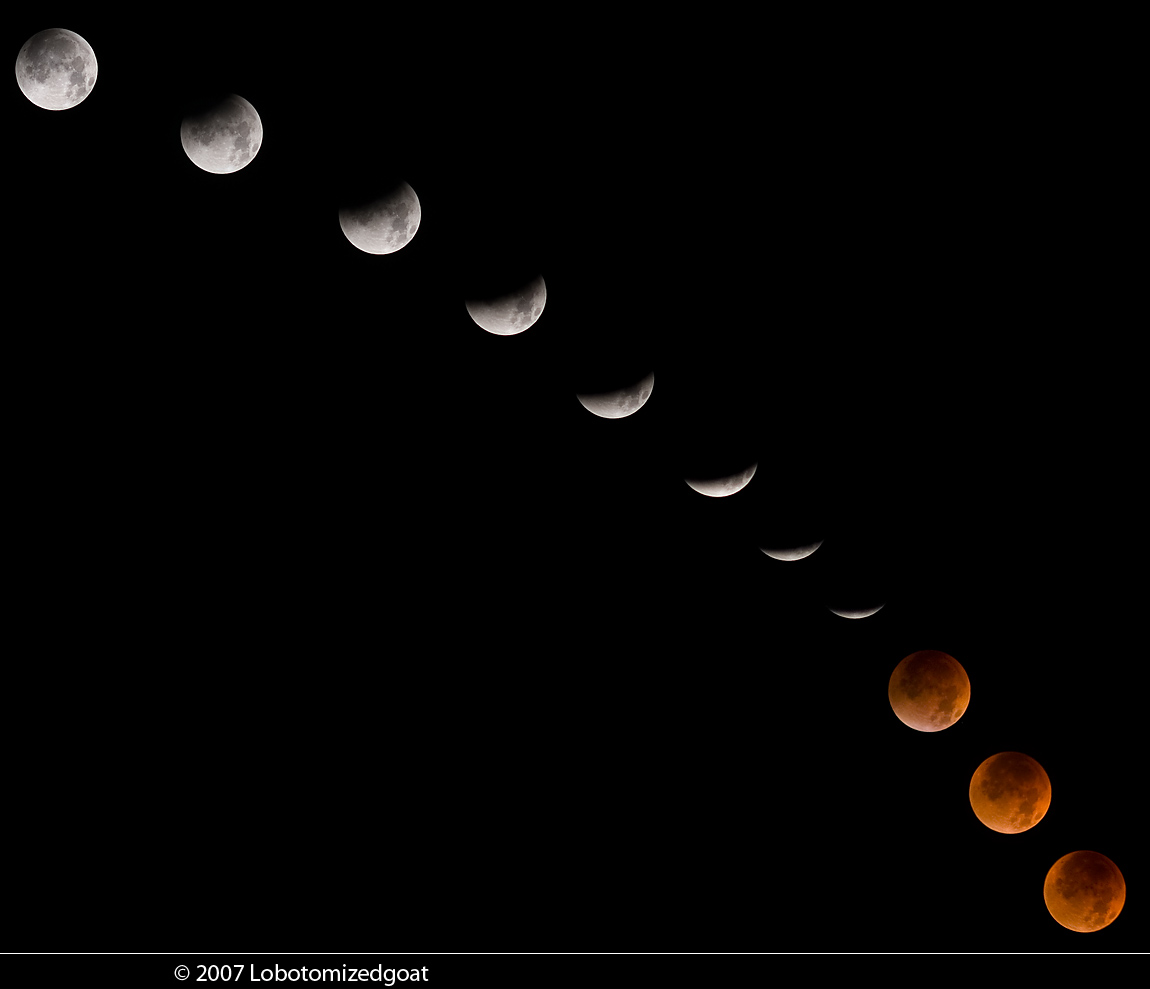
We were out at 5:30am this morning to capture a glimpse of this morning's Lunar Eclipse. My brother-in-law captured this progression of images of the eclipse from Los Angeles.
We were out at 5:30am this morning to capture a glimpse of this morning's Lunar Eclipse. My brother-in-law captured this progression of images of the eclipse from Los Angeles.
Sunday, August 26, 2007
Do not disdain the discipline of the Lord
From today's mass readings, from the Letter to the Hebrews (Ch. 12:5-7, 11-13):
From today's mass readings, from the Letter to the Hebrews (Ch. 12:5-7, 11-13):
Brothers and sisters,God disciplines us as does a loving Father, a discipline that at times seems a cause "not for joy but for pain" but later "brings the peaceful fruit of righteousness". It trains us and forms us. How awesome God is!
You have forgotten the exhortation addressed to you as children:
“My son, do not disdain the discipline of the Lord
or lose heart when reproved by him;
for whom the Lord loves, he disciplines;
he scourges every son he acknowledges.”
Endure your trials as “discipline”;
God treats you as sons.
For what “son” is there whom his father does not discipline?
At the time,
all discipline seems a cause not for joy but for pain,
yet later it brings the peaceful fruit of righteousness
to those who are trained by it.
So strengthen your drooping hands and your weak knees.
Make straight paths for your feet,
that what is lame may not be disjointed but healed.
Saturday, August 25, 2007
Archbishop DiNardo responds...
I wanted to make sure I blogged about this. In his pastoral letter of August 10th, Archbishop DiNardo summarizes the intent of the Congregation for the Doctrine of the Faith's recent clarification on the nature of the Church. I encourage you to read it. In it, he also responds to an angry email he received concerning the document:
I wanted to make sure I blogged about this. In his pastoral letter of August 10th, Archbishop DiNardo summarizes the intent of the Congregation for the Doctrine of the Faith's recent clarification on the nature of the Church. I encourage you to read it. In it, he also responds to an angry email he received concerning the document:
Last week, even as I was already intending on publishing an article about the recent text of the Congregation for the Doctrine of the Faith, I received an e-mail from a Catholic in this archdiocese. That e-mail intensified my motivation. The second sentence of the email states that the Catholic laity think the Pope is a complete idiot for this latest statement "on the solo legitimacy of the Roman Catholic Church as a Christian religion." That is not what the text of the Congregation for the Doctrine of the Faith states. Further it is unbecoming and at the very least lacks Christian charity to call the Successor of St. Peter a "complete idiot." Such a statement is empirically false, is highly tendentious and is not conducive to create dialogue with the Archbishop of Galveston-Houston. (I phoned the person involved and said as much.) I have tried to disengage three arguments in the e-mail from the general nastiness and overly angular rhetoric in order to attempt a somewhat rational response to the writer. The arguments, as I see them, are: (1) the statement could hurt world peace since Muslim radicals also call their religion the only permissible one to rule the world; (2) the statement is the muttering of a Pharisee (i.e. the Pope); (3) it is insulting to non-Catholics.
On Number 1, it is to be recalled that the truth claim affirmed is made on the basis of an understanding, not on the basis of a political program. As I stated above, the formal theological language of Catholicism is traditional and is offered as a way to unpack the truth of God's revelation to us. The language is used in theological dialogue with other Christian groups to get at the meaning of the identity of the term "Church." The statements are not slogans or paths "to rule the world" but ways to understand the New Testament and the ongoing teaching of the Church. The author of the e-mail in question is a lawyer; surely he would not be opposed to the technical language of law which itself is based on a series of reasonable legal principles. Because of the complexity of issues, a technical language is needed, frequently opaque to others, because one is being reasonable within the methods of legal principle and custom. Not everyone can enter into such reason because not everyone is trained in law, though everyone can understand some of the basis for complex legal reasoning and technical language and can appreciate its use. An analogous situation is meant here. The desire to understand God's revealed word and truth leads in a variety of directions. One way is through the development of human reasoning on Revelation that results in a more technical and refined language to make some terms more precise, even though we are always dealing with Mysteries of Faith and not purely human realities. Even ordinary Catholics understand that the everyday language we use in faith is always saturated with a deeper level of meaning, and, while not hostile to reason and its everyday use let alone hostile to a person outside the faith, this language is always addressing a spiritual reality that meets us and embraces us, but is also transcendent to us. The Catholic Faith has an objectivity and a truth that is not fabricated but is accepted as true and life-giving. This total experience/expression is called the fullness of truth, not out of pride but out of wonder of being called to the Catholic Faith. This fullness of truth includes the teaching about the inestimable worth and dignity of each human person, even the person with whom we might disagree. This is a far cry from some aspects of radical Islamic fundamentalism. (I would also add that the vast majority of faithful members of Islam would also disagree with Islamic fundamentalism on this point, even though they would state that their faith is the true faith.) Thus the text of the document cannot be viewed as a long term harm to world peace. Far from such an effect, the document clarifies and invites other Christians to enter into a deeper conversation about the meaning of the Church and Christian faith, a conversation meant to highlight our inestimable dignity as human persons.
The second point of the e-mail is that somehow the Pope is a Pharisee. I must confess that I cannot fathom what this point means. In approving the text of the Congregation for the Doctrine of the Faith the Pope was giving approval to what the faith of the Catholic Church has always stated. There was nothing of a Pharisee there at all.
The third point of the e-mail concerns a fact: the statement of the Congregation for the Doctrine of the Faith is insulting to non-Catholics. On this point I would repeat some comments from above. At a psychological level the statement may indeed seem too stringent. At this level it may have been helpful if the Congregation for the Doctrine of the Faith had given a more ample Press Conference on the day of the document's publication. At a theological level, the statement is meant to clarify how Catholic teaching authority understands the Church, its continuity in time, its being founded as one by Christ, the importance attached to apostolic teaching authority and sacramental life, all elements that are seen as essential for the fullest expression of what the New Testament and the Early Church, as well as the Church through the ages, means when it speaks of "ecclesia," "Christ's flock," the "Kingdom of God," and many other statements and images concerning this fundamental reality of our incorporation by faith through the Holy Spirit into Christ's Body to the glory and praise of God the Father. Though the document initially may have received negative comments from some non-Catholics, I think that the 40+ years of ecumenical dialogue with a wide variety of non-Catholic groups in addition to the wise comments by Cardinal Walter Kasper, the President of the Pontifical Council for Promoting Christian Unity, on the document would more than balance such negativity. There are various affirmations in the document and these statements must be held together, particularly the balance between the fullness of expression of truth in the Catholic Church and the genuine elements of truth and sanctification in other Christian Churches and communities. The unity of the Church, for which Christ prayed, requires courage and perseverance. It also requires a respectful yet clear statement of our understanding. Such an understanding is not hurtful but an invitation to think and examine what is said.
I have tried to summarize the main points of the recent document on the Doctrine of the Church prepared by the Congregation for the Doctrine of the Faith. I have also tried, within the limits of my patience, to respond to a recent e-mail from a member of this local Church on the same document. May I finally add that the role of civility and prudence in expression, even in disagreement, is always necessary in our Church and in our country. The level of discourse in our country at the moment is not very healthy. I have a difficult time abiding insults to any human person; I have a very difficult time abiding insults to the Holy Father, especially by members of the household of the Faith. Let us try to regain our simplicity and purity of heart even in disagreements.
Friday, August 17, 2007
Sunday, August 12, 2007
DC Symposium on the Analogy of Being
The Analogy of Being: Invention of the Anti-Christ, or the Wisdom of God?: A Theological Symposium on the analogia entis to be held at the John Paul II Cultural Center in Washington, D.C., April 4—6, 2008. Anybody planning to attend this?
Courtesy of the Dominican House of Studies:
The Analogy of Being: Invention of the Anti-Christ, or the Wisdom of God?: A Theological Symposium on the analogia entis to be held at the John Paul II Cultural Center in Washington, D.C., April 4—6, 2008. Anybody planning to attend this?
Courtesy of the Dominican House of Studies:
The Analogy of Being: Invention of the Anti-Christ, or the Wisdom of God?
Is there any ‘natural’ knowledge of God available to the human person, apart from Christian revelation, or is all knowledge of God given to human beings uniquely in Christ? Is Christianity irrevocably wed to the classical metaphysical tradition, or can God’s nature and character be rethought in distinctly modern ways, based upon a renewed reading of Scripture? What relationship or likeness, if any, exists between created nature and the grace of God? Does Christian theology presuppose a natural philosophical ‘capacity’ for knowledge of God in the human person?
All of these fundamental theological questions are situated at the heart of the famous 20th century debate between Erich Przywara S.J. and Karl Barth, and were treated in Przywara’s famous work Analogia Entis. These topics were also revisited by Hans Urs von Balthasar in his ecumenical landmark, The Theology of Karl Barth. On the occasion of a forthcoming English translation of Analogia Entis by John Betz and David Bentley Hart, this symposium will invite contemporary theologians indebted to Aquinas, Przywara, Barth and Balthasar to discuss these issues. Is the theological concept of the ‘analogy of being’ in fact an ‘invention of the anti-Christ’ as Karl Barth suggested, or is it a truth about creation revelatory of the wisdom of God?
Saturday, August 11, 2007
The Beginning of Knowledge is Fear of the Lord
Proverbs 1:2-7 (RSV)
Proverbs 1:2-7 (RSV)
That men may know wisdom and instruction,Fear of the Lord essentially means being humble before God, the source of all wisdom and truth.
understand words of insight,
receive instruction in wise dealing,
righteousness, justice, and equity;
that prudence may be given to the simple,
knowledge and discretion to the youth --
the wise man also may hear and increase in learning,
and the man of understanding acquire skill,
to understand a proverb and a figure,
the words of the wise and their riddles.
The fear of the LORD is the beginning of knowledge;
fools despise wisdom and instruction.
Wednesday, August 08, 2007
Feast of St. Dominic

From the Office of Readings:
Sancte Dominice, ora pro nobis!
From the Office of Readings:
Dominic possessed such great integrity and was so strongly motivated by divine love, that without a doubt he proved to be a bearer of honor and grace. He was a man of great equanimity, except when moved to compassion and mercy. And since a joyful heart animates the face, he displayed the peaceful composure of a spiritual man in the kindness he manifested outwardly and by the cheerfulness of his countenance.Deus, qui Ecclesiam tuam beati Dominici Confessoris tui illuminare dignatus es meritis et doctrinis: concede; ut ejus intercessione temporalibus non destituatur auxiliis, et spiritualibus semper proficiat incrementis. Per Dominum nostrum Jesum Christum, Qui Tecum vivit et regnat in unitate Spiritus Sancti, Deus, per omnia saecula saeculorum.
Wherever he went he showed himself in word and deed to be a man of the Gospel. During the day no one was more community-minded or pleasant toward his brothers and associates. During the night hours no one was more persistent in every kind of vigil and supplication. He seldom spoke unless it was with God, that is, in prayer, or about God; and in this matter he instructed his brothers.
Frequently he made a special personal petition that God would deign to grant him a genuine charity, effective in caring for and obtaining the salvation of men. For he believed that only then would he be truly a member of Christ, when he had given himself totally for the salvation of men, just as the Lord Jesus, the Savior of all, had offered himself completely for our salvation. So, for this work, after a lengthy period of careful and provident planning, he founded the Order of Friars Preachers.
In his conversations and letters he often urged the brothers of the Order to study constantly the Old and New Testaments. He always carried with him the gospel according to Matthew and the epistles of Paul, and so well did he study them that he almost knew them from memory.
Two or three times he was chosen bishop, but he always refused, preferring to live with his brothers in poverty. Throughout his life, he preserved the honor of his virginity. He desired to be scourged and cut to pieces, and so die for the faith of Christ. Of him Pope Gregory IX declared: "I knew him as a steadfast follower of the apostolic way of life. There is no doubt that he is in heaven, sharing in the glory of the apostles themselves."
Sancte Dominice, ora pro nobis!
Sunday, August 05, 2007
William Byrd: The Queen's Servant, but God's First
I ran across this article by Matthew Alexander about one of the most well-known composers of the English Renaissance, William Byrd:
The Queen’s Servant, but God’s First
Many of you may already know that William Byrd was a Roman Catholic composer who lived during the Elizabethan persecutions in England. Byrd made a name for himself writing music for the established Church of England, but being a loyal and devoted Roman Catholic, he also wrote some of his most beautiful work for the Roman Catholic underground. The article beautifully illustrates some of the ways in which Byrd would embed expressions of his Catholicism in his intricately woven polyphony.
I ran across this article by Matthew Alexander about one of the most well-known composers of the English Renaissance, William Byrd:
The Queen’s Servant, but God’s First
Many of you may already know that William Byrd was a Roman Catholic composer who lived during the Elizabethan persecutions in England. Byrd made a name for himself writing music for the established Church of England, but being a loyal and devoted Roman Catholic, he also wrote some of his most beautiful work for the Roman Catholic underground. The article beautifully illustrates some of the ways in which Byrd would embed expressions of his Catholicism in his intricately woven polyphony.
[William Byrd] was a fixture in the liturgical life of the recusant safe-houses, the great country homes of Catholic aristocrats, which served as 16th-century catacombs riddled with secret chambers to hide fugitive priests. For these communities he wrote Mass settings and motets (in Latin), managing to publish and even furtively to perform them. His finest masterpieces are perhaps his Masses for Three, Four, and Five Voices, which he wrote for the underground liturgies, the straitened circumstances of which pressed themselves intimately upon the compositions...These masses are among my favorite compositions. In addition to his masses, I also love Byrd's composition of the Ave Verum Corpus. Our parish choir became quite used to singing it during the past year.
It is in these Masses that we hear some of Byrd’s most poignant expressions of his Catholicism. One especially powerful instance occurs in the Credo movement of the Mass for Four Voices. This is the Nicene Creed, the Mass’s profession of faith, the end of which offers the line, et unam sanctam Catholicam et Apostolicam Ecclesiam (“and in one holy Catholic and Apostolic Church”). Byrd’s setting of this phrase is movingly defiant. For the preceding section, and indeed, much of the movement, Byrd has written elegant counterpoint, but now he pulls the four voices together and brings them to a dramatic closing cadence. Then, for this new phrase, he briefly changes the texture to one that is essentially homophonic, a common Renaissance device to indicate emphasis. The sopranos lead with the words et unam followed almost immediately by the other three parts together on the same text. The phrase climaxes with the word Catholicam, which the sopranos lightly articulate and the other voices forcefully repeat as one. By setting one voice against three, Byrd masterfully harnesses the emphatic qualities of both polyphony and homophony: the text repetition of the former and the clarity and unity of the latter.
Friday, August 03, 2007
An Evening of Buxtehude, Organ and Harpsichord

We just got back from our parish's monthly first friday concert of sacred music. Tonight featured the music of Baroque composer Dieterich Buxtehude. In addition to our very nice pipe organ, we finally got to hear several pieces on our parish chapel's new harpsichord. Delightful!
We just got back from our parish's monthly first friday concert of sacred music. Tonight featured the music of Baroque composer Dieterich Buxtehude. In addition to our very nice pipe organ, we finally got to hear several pieces on our parish chapel's new harpsichord. Delightful!
Monday, July 30, 2007
St. Ambrose: to the Sacred Altar of Christ!

From St. Ambrose of Milan, On the Mysteries, Ch. VIII, circa 387 A.D.:

From St. Ambrose of Milan, On the Mysteries, Ch. VIII, circa 387 A.D.:
Fresh from the [baptismal] waters and resplendent in these garments, God's holy people hasten to the altar of Christ, saying:What a gift we have in Christ!I will go in to the altar of God, to God who gives joy to my youth.They have sloughed off the old skin of error, their youth renewed like an eagle's, and they make haste to approach that heavenly banquet. They come and, seeing the sacred altar prepared, cry out:You have prepared a table in my sight.David puts these words into their mouths:The Lord is my shepherd and nothing will be lacking to me. He has set me down there in a place of pasture. He has brought me beside refreshing water.Further on, we read:For though I should walk in the midst of the shadow of death, I shall not be afraid of evils, for you are with me. Your rod and your staff have given me comfort. You have prepared in my sight a table against those who afflict me. You have made my head rich in oil, and your cup, which exhilarates, how excellent it is.... It is wonderful that God rained manna on our fathers and they were fed with daily food from heaven. And so it is written:Man ate the bread of angels.Yet those who ate that bread all died in the desert. But the food that you receive, that living bread which came down from heaven, supplies the very substance of eternal life, and whoever will eat it will never die, for it is the body of Christ.
Consider now which is the more excellent: the bread of angels or the flesh of Christ, which is indeed the body that gives life. The first was manna from heaven, the second is above the heavens. One was of heaven, the other is of the Lord of the heavens; one subject to corruption if it was kept till the morrow, the other free from all corruption, for if anyone tastes of it with reverence he will be incapable of corruption. For our fathers, water flowed from the rock; for you, blood flows from Christ. Water satisfied their thirst for a time; blood cleanses you for ever. The Jew drinks and still thirsts, but when you drink you will be incapable of thirst. What happened in symbol is now fulfilled in reality.
If what you marvel at is a shadow, how great is the reality whose very shadow you marvel at. Listen to this, which shows that what happened in the time of our fathers was but a shadow.They drank, it is written, from the rock that followed them, and the rock was Christ. All this took place as a symbol for us.You know now what is more excellent: light is preferable to its shadow, reality to its symbol, the body of the Giver to the manna he gave from heaven.
Sunday, July 29, 2007
Traditional Latin Mass at my parish in Sugar Land
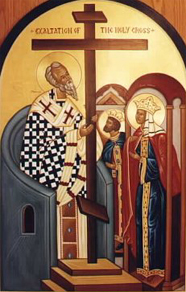
From our parish bulletin today:
From our parish bulletin today:
In accord with the recent declaration of Pope Benedict XVI, the Mass according to the extraordinary form of the Roman Rite will be offered at St. Theresa's on the Feast of the Exaltation of the Holy Cross, Friday, September 14 at 7:30pm. If there is enough interest in the continued celebration of this form of the Mass, an effort will be made to offer it on a regular basis.
Active participation in the liturgy is realized through attentive listening, interior recollection, and external action. It is therefore essential that those who assist at the Traditional Latin Mass be familiar with its form, the responses, and the chant melodies.
A two-day workshop on the Traditional Mass will be held on Thursday, August 17 and Friday, August 18 from 7:00-8:30pm. A single session will be held on Saturday, August 19 from 9:30am - Noon. All presentations will be held in the Daily Mass Chapel.
Monday, July 23, 2007
Non, je ne regrette rien!
Roman Miscellany posts about going to see the film, La Vie en Rose, which is about famed French singer Édith Piaf:
Thanks to Tea at Trianon for the link.
Roman Miscellany posts about going to see the film, La Vie en Rose, which is about famed French singer Édith Piaf:
The heroine, Piaf, is not the most attractive of characters - proud, obstinate and leading a life that caused the Archbishop of Paris to refuse her a Catholic funeral. However, her childlike piety also comes across very strongly. She refuses to go on stage at the Paris Olympia without wearing her crucifix and she is often shown praying before a performance.RM also links to a YouTube featuring one of Piaf's most celebrated songs:Believe it or not, I studied this song in a French Phonetics and Phonology course I took back at the university, because of Piaf's use of very distinct and prominent nasal vowels.
Rather unexpectedly, St Therese of Lisieux has a constant and unseen presence in the film. As a child Piaf suffered from blindness (a result, it seems,of keratitis). The kindly prostitutes who cared for her arranged for Piaf to visit the saint's tomb to pray for a recovery. Shortly afterwards she could see again. The saint's influence continued in Piaf's life until the very end, making La Vie en Rose a powerful essay on the efficacy of prayer.
Thanks to Tea at Trianon for the link.
Subscribe to:
Posts (Atom)
LinkWithin
