A very good review. Just one quibble: I think it is disputed that Copernicus was himself a priest, although he had a very close relationship with the Catholic Church throughout his life. I have read some references that indicate that he might have been a Third Order Dominican.
Saturday, May 16, 2009
Father Barron on "Angels and Demons"
A very good review. Just one quibble: I think it is disputed that Copernicus was himself a priest, although he had a very close relationship with the Catholic Church throughout his life. I have read some references that indicate that he might have been a Third Order Dominican.
Saturday, May 09, 2009
Mary and the Order of Preachers

Friday was the Feast of the Patronage of the Blessed Virgin Mary over the entire Order of Preachers, according to the Dominican Liturgical calendar.
From the Commentary on the Constitutions of the Order of Preachers by Bl. Humbert of Romans, who was the fifth master of the Order:
From the events surrounding the beginning of our Order many reasons can be adduced why the Blessed Virgin Mary herself may be considered the special patroness of our Order. From what I have heard with my own ears and from the many accounts in the 'Lives of the Brethren', it seems that she is our special Mother, bringing forth, advancing and defending the Order whose purpose is to praise, to bless and to preach her Son.From the Miracles of St. Dominic as narrated by Sr. Cecilia:
Suddenly [Dominic] was caught up in spirit before God and saw the Lord and the Blessed Virgin sitting at his right. It seemed to Blessed Dominic that Our Lady was wearing a cloak the color of sapphire.It has often been said that Dominic had the gift of tears. Holy Mary, Mother of God, pray for us sinners.
As Blessed Dominic looked around, he could see religious of all the orders but his own before the throne of God. He began to weep bitterly and stood apart, not daring to approach the Lord and his Mother. Then Our Lady motioned for him to come near. But he would not dare, until the Lord himself also called him.
Blessed Dominic cast himself down before them weeping bitterly. The Lord told him to rise, and when he did, asked him, "Why are you weeping so?" "I am weeping because I see all the other orders here but no sign of my own." The Lord said to him, "Do you want to see your Order?" and he answered, "Yes, Lord." Then the Blessed Virgin opened the cloak she was wearing and spread it out before Blessed Dominic, to whom it seemed cast enough to cover the entire heaven, and under it he saw a large multitude of the brethren.
Then prostrating himself, Blessed Dominic gave thanks to God and to Blessed Mary his Mother.
Friday, May 08, 2009
Fact Checking: Angels & Demons
Steve Greydanus has some fact-checking on Dan Brown's book. Yes, like The DaVinci Code, "it's only fiction". Yet, I still run across folks who think it's more fact than fiction. Angels & Demons seems to be more silly, in my opinion. The old "Catholic Church vs. Science" lie. Yet we have priests like Clavius, Mendel, Grimaldi, LeMaitre, and other Catholics like Copernicus and, yes, even Galileo himself, who say: "No, not quite."

Fires in Santa Barbara
Another terrible fire in Santa Barbara right now. The "Jesusita Fire" is only 10% contained tonight. I know several people who have evacuated, one having to spend the night in a Red Cross shelter. Please pray for relief for this fire!
Meanwhile, a load of people plan to descend upon Isla Vista (near UC Santa Barbara) this weekend for "Floatopia 2", which folks worry will put a massive burden on the region's firefighting resources. "Floatopia" is an event where drunken kids, mostly from out of town, take over an Isla Vista beach and float out over the water in a drunken frenzy, leaving behind injuries and an ocean and beach full of half-empty beer cans. The Santa Barbara County Board of Supervisor passed an urgency ordinance banning alcohol consumption, but most people don't think it will have an effect. What will happen? The last "Floatopia" drew over 12,000 people.
Meanwhile, a load of people plan to descend upon Isla Vista (near UC Santa Barbara) this weekend for "Floatopia 2", which folks worry will put a massive burden on the region's firefighting resources. "Floatopia" is an event where drunken kids, mostly from out of town, take over an Isla Vista beach and float out over the water in a drunken frenzy, leaving behind injuries and an ocean and beach full of half-empty beer cans. The Santa Barbara County Board of Supervisor passed an urgency ordinance banning alcohol consumption, but most people don't think it will have an effect. What will happen? The last "Floatopia" drew over 12,000 people.
Wednesday, May 06, 2009
Hopkins and Haecceity
We had a very interesting discussion in our Catholic reading group a few days ago. The subject of this session was the poetry of Gerard Manley Hopkins. I would like to thank Ben, in particular, for sharing Hopkins' As Kingfishers Catch Fire with the group:
As kingfishers catch fire, dragonflies draw flame;The poem illustrates quite nicely the influence Bl. John Duns Scotus had on Hopkins' theology, particularly concerning the concept of haecceity -- that which pertains to the haecceitas, or thisness, of a person or object, that identifies it as being individual or distinct from other things. God made us as human beings, but he made each one of us, and all living creatures, unique. This would better explain some terms Hopkins identified: inscape and instress, which are described here in more detail:
As tumbled over rim in roundy wells
Stones ring; like each tucked string tells, each hung bell's
Bow swung finds tongue to fling out broad its name;
Each mortal thing does one thing and the same:
Deals out that being indoors each one dwells;
Selves - goes itself; myself it speaks and spells,
Crying What I do is me: for that I came.
I say more: the just man justices;
Keeps grace: that keeps all his goings graces;
Acts in God's eye what in God's eye he is--
Christ. For Christ plays in ten thousand places,
Lovely in limbs, and lovely in eyes not his
To the Father through the features of men's faces.
By "inscape" he means the unified complex of characteristics that give each thing its uniqueness and that differentiate it from other things, and by "instress" he means either the force of being which holds the inscape together or the impulse from the inscape which carries it whole into the mind of the beholder...You see this generally reflected in Hopkins' poetry. He writes about this bird, this tree, this person, rather than about birds, or trees, or people in general. Exquisite.
The concept of inscape shares much with Wordsworth's "spots of time," Emerson's "moments," and Joyce's "epiphanies," showing it to be a characteristically Romantic and post-Romantic idea. But Hopkins' "inscape" is also fundamentally religious: a glimpse of the inscape of a thing shows us why God created it. "Each mortal thing does one thing and the same:/ . . myself it speaks and spells,/ Crying What I do is me: for that I came."
Why Aquinas Matters Today
In three points, from Catholic News Service in an interview with Dominican Father Thomas Joseph White of the Pontifical Faculty of the Immaculate Conception in DC:
The first, I would say, is Aquinas' insistence on the harmony of faith and reason...Read the whole thing.
The second point is that for Aquinas the creation reflects the mystery of the wisdom of God. If we look off into the creation, we see a beautiful, existent world that is good, that is orderly and that bespeaks the wisdom of God...
The third point, I would say, is that for Aquinas there is a very profound emphasis on the primacy of grace for all of our works that lead to union with God. God is not only the source from whom we all come, but he is the ultimate term or endpoint toward whom we are all returning. How do we return to God? For Aquinas, by grace...
Friday, May 01, 2009
Swine Flu
Cardinal DiNardo has requested that churches suspend distribution of Holy Communion from the chalice until more is known about the Swine Flu (H1N1) problem. That seems prudent, considering we don't truly know the scope, scale, or intensity of the problem just yet, in spite of the media's intent to sensationalize the issue. The media seems to have forgotten that the common influenza virus kills thousands of people every year in the United States, yet it seems more intent on exploiting the unknown with regard to this virus. As far as I can see right now, prevention seems to revolve around common sense habits: wash your hands before you eat! cover your mouth when you cough or sneeze! etc.
This isn't the first time we've faced a "swine flu" alarm in this country. Check out these ads from 1976 urging people to get swine flu vaccinations:
Get the message?
This isn't the first time we've faced a "swine flu" alarm in this country. Check out these ads from 1976 urging people to get swine flu vaccinations:
Get the message?
Thursday, April 30, 2009
Aquinas on Implicit Baptism of Desire
Taylor Marshall discusses Aquinas' articulation of an implicit baptism of desire:
Last Monday I was fascinated to learn that Saint Thomas Aquinas had articulated a doctrine of implicit baptism of desire.Read the whole thing (and the comments).As stated above (1, ad 2; 68, 2) man receives the forgiveness of sins before Baptism in so far as he has Baptism of desire, explicitly or implicitly [there are the key words]; and yet when he actually receives Baptism, he receives a fuller remission, as to the remission of the entire punishment. So also before Baptism Cornelius and others like him receive grace and virtues through their faith in Christ and their desire for Baptism, implicit or explicit: but afterwards when baptized, they receive a yet greater fullness of grace and virtues. Hence in Psalm 22:2, "He hath brought me up on the water of refreshment," a gloss says: "He has brought us up by an increase of virtue and good deeds in Baptism. Yet catechumens who die without baptism can be saved but only as through fire. That is, they are absolved of eternal punishment, not temporal punishment."The perplexing thing is that Saint Thomas Aquinas believes that baptism by desire only remits eternal punishment and not the temporal punishment due to sins.
STh III, q. 69, a. 4.
Tuesday, April 21, 2009
Moniales and the Master of the Order
Today, the Dominican Nuns of Summit, New Jersey were visited by the Master of the Order, Fr. Carlos Azpiroz Costa, O.P., who for us is the current successor of St. Dominic. They describe the visit with photos.
Sunday, April 19, 2009
The octave day of new birth
Today we celebrate Divine Mercy Sunday, which is also the Sunday of the Octave of Easter. This morning's Office of Readings presents to us words from St. Augustine's Eighth Sermon in octava Paschae given to the newly baptized:
It is not uncommon to find baptismal fonts that are octagonal in shape for this very reason, as we find in the ancient baptistery in Milan where St. Augustine himself was likely baptized:

As Augustine also references, the number eight also applies to why the Church observes the Lord's Day, Sunday, as the eighth day, a day of new creation and birth in Christ, which, as Augustine writes, will be brought to completion in the resurrection of the dead. The work of Redemption is of greater significance and splendor than that of the first Creation, as the Catechism points out (CCC 349):
I speak to you who have just been reborn in baptism, my little children in Christ... [Baptism] is a sacrament of new life which begins here and now with the forgiveness of all past sins, and will be brought to completion in the resurrection of the dead. You have been buried with Christ by baptism into death in order that, as Christ has risen from the dead, you also may walk in newness of life...This is an octave. Augustine here demonstrates the great significance of the number eight as a sign of redemption and new life as well as resurrection, as our own resurrection is secured by Christ's, in whose body we are incorporated by way of our baptism by water and the Spirit. Baptism into Christ is thus intrinsically linked to resurrection.
This is the octave day of your new birth. Today is fulfilled in you the sign of faith that was prefigured in the Old Testament by the circumcision of the flesh on the eight day after birth. When the Lord rose from the dead, he put off the mortality of the flesh; his risen body was still the same body, but it was no longer subject to death. By his resurrection he consecrated Sunday, or the Lord's day. Though the third after his passion, this day is the eighth after the Sabbath, and thus also the first day of the week.
And so your own hope of resurrection, though not yet realized, is sure and certain, because you have received the sacrament or sign of this reality, and have been given the pledge of the Spirit.
It is not uncommon to find baptismal fonts that are octagonal in shape for this very reason, as we find in the ancient baptistery in Milan where St. Augustine himself was likely baptized:
As Augustine also references, the number eight also applies to why the Church observes the Lord's Day, Sunday, as the eighth day, a day of new creation and birth in Christ, which, as Augustine writes, will be brought to completion in the resurrection of the dead. The work of Redemption is of greater significance and splendor than that of the first Creation, as the Catechism points out (CCC 349):
But for us a new day has dawned: the day of Christ's Resurrection. The seventh day completes the first creation. The eighth day begins the new creation. Thus, the work of creation culminates in the greater work of redemption. The first creation finds its meaning and its summit in the new creation in Christ, the splendour of which surpasses that of the first creation.And a blessed Pascha to my Eastern Orthodox readers!
Thursday, April 16, 2009
Patriarch Kirill washes feet
Couldn't think of a good title, but the post is interesting. Byzantine, Texas links to an article describing Patriarch Kirill of Moscow performing the rite of the washing of the feet at the conclusion of the (Orthodox) Holy Thursday Divine Liturgy at the Annunciation Cathedral in Moscow.
“In our tumultuous and troubled times, when man is susceptible to various afflictions and temptations,” the Patriarch continued, “we must especially come running to Christ’s Chalice and reverently eat of the Body and Blood of the Savior for our salvation.” Today’s celebration, in the words of the Patriarch, is an invitation for us to live an active liturgical life, not as observers, but as participants...Read the whole thing.
The Patriarch then related that, in performing the rite of the washing of the feet, he had “performed an action prescribed for us by our Holy Fathers.”
“In imitation of the Savior, the Patriarch today washed the feet of priests who symbolized the twelve Apostles,” said His All-Holiness, emphasizing that this rite helps us to understand the depths of the humility of Christ, Who became man in order to save us.
Tuesday, April 14, 2009
Christ is risen!
He is risen, indeed!

We just returned from visiting family in Montgomery, Alabama. For this trip, we flew in and out of Birmingham, which is about 1.5 hrs north. Perhaps next time we'll be able to make a pilgrimage to EWTN and the Shrine of the Most Blessed Sacrament.
Up until this year, our Easter experience had always involved the magnificent Easter Vigil on Saturday night. This year, however, we went in the morning -- my wife and I going to the Catholic church near my family's home, and my family, of course, going to their Baptist church down the street. But we reunited afterward for the requisite Easter feast! The local Catholic church was quite diverse, and we felt quite comfortable there. The liturgy was done very well, and of course, the Mass was awesome as it always is.
We explored the countryside a bit and a lot more of the city.

We just returned from visiting family in Montgomery, Alabama. For this trip, we flew in and out of Birmingham, which is about 1.5 hrs north. Perhaps next time we'll be able to make a pilgrimage to EWTN and the Shrine of the Most Blessed Sacrament.
Up until this year, our Easter experience had always involved the magnificent Easter Vigil on Saturday night. This year, however, we went in the morning -- my wife and I going to the Catholic church near my family's home, and my family, of course, going to their Baptist church down the street. But we reunited afterward for the requisite Easter feast! The local Catholic church was quite diverse, and we felt quite comfortable there. The liturgy was done very well, and of course, the Mass was awesome as it always is.
We explored the countryside a bit and a lot more of the city.
Sunday, April 05, 2009
Palm Sunday

The Gospel of John 12:1-18 (RSV)
Six days before the Passover, Jesus came to Bethany, where Laz'arus was, whom Jesus had raised from the dead. There they made him a supper; Martha served, and Laz'arus was one of those at table with him. Mary took a pound of costly ointment of pure nard and anointed the feet of Jesus and wiped his feet with her hair; and the house was filled with the fragrance of the ointment.
But Judas Iscariot, one of his disciples (he who was to betray him), said, "Why was this ointment not sold for three hundred denarii and given to the poor?" This he said, not that he cared for the poor but because he was a thief, and as he had the money box he used to take what was put into it.
Jesus said, "Let her alone, let her keep it for the day of my burial. The poor you always have with you, but you do not always have me."
When the great crowd of the Jews learned that he was there, they came, not only on account of Jesus but also to see Laz'arus, whom he had raised from the dead. So the chief priests planned to put Laz'arus also to death, because on account of him many of the Jews were going away and believing in Jesus. The next day a great crowd who had come to the feast heard that Jesus was coming to Jerusalem. So they took branches of palm trees and went out to meet him, crying, "Hosanna! Blessed is he who comes in the name of the Lord, even the King of Israel!" And Jesus found a young ass and sat upon it; as it is written, "Fear not, daughter of Zion; behold, your king is coming, sitting on an ass's colt!"
His disciples did not understand this at first; but when Jesus was glorified, then they remembered that this had been written of him and had been done to him. The crowd that had been with him when he called Laz'arus out of the tomb and raised him from the dead bore witness. The reason why the crowd went to meet him was that they heard he had done this sign.
Thursday, April 02, 2009
Going forward...
I first received the sacraments of the Church on Saturday, March 29th, 1997 at my home parish of St. Louis de Montfort in Santa Maria, California. I was 18 years old then, but 'twas only yesterday, really. Now I'm 30, and I'm so very happy to be home.
Laudetur Iesus Christus!
Laudetur Iesus Christus!
Sunday, March 29, 2009
Jane Wyman: Lay Dominican

When my pastor told me this morning that he had read that Jane Wyman (ex-wife of President Ronald Reagan) was a Third Order Dominican, I had to look it up myself. She was a convert to the Catholic Church and never remarried after the break-up of her last marriage. Sure enough, she made her profession as a Lay Dominican later in her life and was involved in several charitable causes related to the Church and to the Order. She was buried in the habit of the Order after she died in her sleep in 2007.
Thursday, March 26, 2009
Houston Prayer Vigil Friday Evening
Planned Parenthood is having its national convention here in Houston this weekend. From TexasFamilies.org:
Not only is Planned Parenthood in the process of remodeling what will be the largest abortion center in the Western Hemisphere here in Houston, but they are also having their national convention here the last week of March!The group will gather in the parking lot on Jackson which is directly behind Annunciation Catholic Church at 1618 Texas Ave. at 6:00 PM and walk in a procession. Pro-lifers from every denomination are invited and encouraged to participate.
That means hundreds of Planned Parenthood employees from around the country will be here in Houston.
On Friday March 27th, Planned Parenthood will have their 2009 Gala and Annual Awards ceremony at the George R. Brown Convention Center. They will be honoring Hillary Clinton.
Don't stay home on Friday, March 27th! We need you to join us in a prayer vigil on the sidewalk across the street from the George R. Brown.
Wednesday, March 25, 2009
The Solemnity of the Annunciation

Today, the Dominican Supplement to the Liturgy of the Hours points us to a reading from our dearest sister, Catherine of Siena:
You, O Mary, have been made a book in which our rule is written today. In you today is written the eternal Father’s wisdom; in you today our human strength and freedom are revealed...Fiat mihi secundum Verbum tuum.
O Mary, I see this Word given to you, living in you yet not separated from the Father–just as the word one has in one’s mind does not leave one’s heart or become separated from it even through that word is externalized and communicated to others. In these things our human dignity is revealed–that God should have done such and so great things for us.
And even more in you, O Mary, our human strength and freedom are today revealed, for after the deliberation of such and so great a council, the angel was sent to you to announce to you the mystery of the divine counsel and to seek to know your will, and God’s Son did not come down into your womb until you had given your will’s consent. He waited at the door of your will for you to open to him; for he wanted to come into you, but he would never have entered unless you had opened to him, saying, “Here I am, God’s servant; let it be done to me as you have said.”
The eternal Godhead, O Mary, was knocking at your door, but unless you had opened that door of your will God would not have taken flesh in you. Blush, my soul, when you see that today God has become your relative in Mary. Today you have been shown that even though you were made without your help, you will not be saved without your help.
O Mary, My tenderest love! In you is written the Word, from whom we have the teaching of life. You are the tablet that sets this teaching before us.
Les Misérables
The Theatre Under the Stars (TUTS) in Houston, a local musical theatre production company, is presenting Les Misérables for the first time, and only until April 5th. We had been thinking about going with my reading group, but it doesn't look like it's going to happen. Anyone been?
Ullamaliztli
I suspect that if Football were like the Aztec game of Ullamaliztli, in which the losing team was sacrificed to the gods, then there wouldn't be as much interest in Football anymore. Or perhaps I am wrong?
Sunday, March 22, 2009
Our Lady in Mexico City
Saturday, March 21, 2009
Facebook and "Ambient Awareness"
Over the last few weeks, I have been heavily moderating my experience with Facebook. I have been doing it in order to give myself a sort-of Lenten reflection on social networking and digital intimacy: is it really a positive experience, or is it a meaningless distraction? This type of thing isn't new to me. My friends and I grew up with dial-up bulletin board systems (even ran my own for a while) and chat-boards (I'm not talking about Prodigy or AOL) long before blogs became popular.
Facebook is a strange beast. Before really getting into it, I had really come to question the worth of the micro-blogging phenomenon supported by networking sites such as Facebook and Twitter in which one is encouraged to post brief messages concerning the unimportant minutiae of one's daily life. Yet, I found myself also strangely addicted to it. Clive Thompson of the New York Times asked the same question in an article published last September, "Brave New World of Digital Intimacy":
I myself have been tempted to vent my frustrations in ways I am not always comfortable doing on my blog, particularly recently with the efforts of the Obama Administration to destroy protections on human life. I began to see a picture of myself emerging in which I saw myself as a particularly negative person, prone to outburst, lacking reflection and balance. I am not a hot-headed reactionary, yet I began to understand that this must be how others were beginning to see me, particularly those with whom I did not maintain close contact, something Facebook was designed to remedy. That was my first indication that something was amiss. It also seemed to encourage people to develop erratic opinions about things they really knew nothing about, leading to the temptation to be deliberately provocative and incendiary.
But why the fascination over people's minute-by-minute reports? Thompson continues:
The thrust of Thompson's article seems to be that this type of intimacy is, at its root, good and is getting us back to what's really important about healthy relationships. I'm not yet sure about that. While Facebook is a very good means to keep folks updated on important items, easily share photos, and post links, it also provides a really good distraction from one's own life. Personally, I have found that by distancing myself from it, I have found myself more easily able to do constructive things, whether it be spending time with my wife, or immersing myself in prayer and study. I'll leave it there... for now.
Facebook is a strange beast. Before really getting into it, I had really come to question the worth of the micro-blogging phenomenon supported by networking sites such as Facebook and Twitter in which one is encouraged to post brief messages concerning the unimportant minutiae of one's daily life. Yet, I found myself also strangely addicted to it. Clive Thompson of the New York Times asked the same question in an article published last September, "Brave New World of Digital Intimacy":
In essence, Facebook users didn’t think they wanted constant, up-to-the-minute updates on what other people are doing. Yet when they experienced this sort of omnipresent knowledge, they found it intriguing and addictive. Why?Why, indeed? And what does one do with all of that knowledge?
Social scientists have a name for this sort of incessant online contact. They call it “ambient awareness.” It is, they say, very much like being physically near someone and picking up on his mood through the little things he does — body language, sighs, stray comments — out of the corner of your eye. Facebook is no longer alone in offering this sort of interaction online. In the last year, there has been a boom in tools for “microblogging”: posting frequent tiny updates on what you’re doing. The phenomenon is quite different from what we normally think of as blogging, because a blog post is usually a written piece, sometimes quite long: a statement of opinion, a story, an analysis. But these new updates are something different. They’re far shorter, far more frequent and less carefully considered.Yes, far, far less carefully considered. Writing a blog post takes some time, reflection, and analysis (not including those blogs prone to constant axe-grinding, which I make a point of avoiding and encourage others to do so as well). On the other hand, micro-blogging takes no time at all. I quickly saw how easily the most reasonable people post not only about the meaningless details of the day, but also their many erratic frustrations with the people and events of their life and life in general, including politics and religion. One friend proclaims, "The pope is an idiot!" Another proclaims, "Obama is an idiot!" And another, "Palin is an idiot!" It wears on a person after a while.
I myself have been tempted to vent my frustrations in ways I am not always comfortable doing on my blog, particularly recently with the efforts of the Obama Administration to destroy protections on human life. I began to see a picture of myself emerging in which I saw myself as a particularly negative person, prone to outburst, lacking reflection and balance. I am not a hot-headed reactionary, yet I began to understand that this must be how others were beginning to see me, particularly those with whom I did not maintain close contact, something Facebook was designed to remedy. That was my first indication that something was amiss. It also seemed to encourage people to develop erratic opinions about things they really knew nothing about, leading to the temptation to be deliberately provocative and incendiary.
But why the fascination over people's minute-by-minute reports? Thompson continues:
For many people — particularly anyone over the age of 30 — the idea of describing your blow-by-blow activities in such detail is absurd. Why would you subject your friends to your daily minutiae? And conversely, how much of their trivia can you absorb? The growth of ambient intimacy can seem like modern narcissism taken to a new, supermetabolic extreme — the ultimate expression of a generation of celebrity-addled youths who believe their every utterance is fascinating and ought to be shared with the world. Twitter, in particular, has been the subject of nearly relentless scorn since it went online. “Who really cares what I am doing, every hour of the day?” wondered Alex Beam, a Boston Globe columnist, in an essay about Twitter last month. “Even I don’t care.”"Modern narcissism". I like that description. Posting my opinions gave me a sense of value, as though the details about what I ate for lunch that day were really that interesting. But it adds up:
Indeed, many of the people I interviewed, who are among the most avid users of these “awareness” tools, admit that at first they couldn’t figure out why anybody would want to do this.
Each little update — each individual bit of social information — is insignificant on its own, even supremely mundane. But taken together, over time, the little snippets coalesce into a surprisingly sophisticated portrait of your friends’ and family members’ lives, like thousands of dots making a pointillist painting. This was never before possible, because in the real world, no friend would bother to call you up and detail the sandwiches she was eating. The ambient information becomes like “a type of E.S.P.,” as [Ben] Haley described it to me, an invisible dimension floating over everyday life.And that's just it. People's lives unfold before you like a soap opera. You gain a sense of control even as a silent observer, privy to intimate life details people feel compelled to share. It seems to me that this can be good, but it can also be bad. And what are we to make of the distinction between real "friendship" and "Facebook friends", which for some, seems to be more of a popularity contest than about maintaining solid relationships with other people?
The thrust of Thompson's article seems to be that this type of intimacy is, at its root, good and is getting us back to what's really important about healthy relationships. I'm not yet sure about that. While Facebook is a very good means to keep folks updated on important items, easily share photos, and post links, it also provides a really good distraction from one's own life. Personally, I have found that by distancing myself from it, I have found myself more easily able to do constructive things, whether it be spending time with my wife, or immersing myself in prayer and study. I'll leave it there... for now.
The Slums of Hollywood
Speaking of slumdogs, I was thinking back to 1997 when the unrealistic, contrived, one-dimensional love story called "Titanic" was released. Remember all the hype about Leonardo DiCaprio growing up in the "slums of Hollywood" only to make it as a big moviestar? While I was working in Los Angeles during the summer of 1998, I went to visit a coworker friend of mine from the Archdiocesan chancery office who lived in the East Hollywood/Los Feliz area. Not Beverly Hills, but a pretty nice area -- better than a lot of places in Los Angeles. I later learned that the East Hollywood and Los Feliz area was the "slums of Hollywood" from which DiCaprio emerged. Real rags-to-riches story there.
Slumdog Millionaire
We rarely go to the movie theater nowadays, but after all of the raving about Slumdog Millionaire, we decided to go and check it out this afternoon. We enjoyed it very much. It does have a bit of violence, but I found it to be a good story with good characters. In a strange way, taken as a whole, it was also a fun film.
Of course, before the film started, we were treated to a teaser for Angels and Demons, the next Dan Brown flop, which will be sure to perpetuate more myths concerning the Church's relationship with scientific inquiry and other things. But beware - you may have to fight several albino Opus Dei "monks" that will stand in the way of your journey to truth!
Of course, before the film started, we were treated to a teaser for Angels and Demons, the next Dan Brown flop, which will be sure to perpetuate more myths concerning the Church's relationship with scientific inquiry and other things. But beware - you may have to fight several albino Opus Dei "monks" that will stand in the way of your journey to truth!
Wednesday, March 11, 2009
On Language and Filioque
Reflections on the filioque and language from Fr. Hunwicke, courtesy of Josephus Flavius of Byzantine, Texas. Not a new argument, but something to keep in mind as we observe current developments with other groups:
I do not intend to explain what this is all about ab initio to those who do not already know the general outlines. Just to add some facts which those who do know may not be familiar with.Read the rest of Fr. Hunwicke's reflection.
In 1995 the Pontifical Council for the Promotion of Christian Unity published a learned and interesting paper which suggested that a lack of correlation between the Greek (ekporeuesthai) and Latin (procedere) terms for "proceedeth" is part of the problem. ekporeuesthai refers to the origin of the Holy Spirit within the eternal and glorious economy of the Holy Trinity. And, since the Father is the Source (pege, aitia) of the being of the other two Persons, clearly the Spirit ekporeuetai from the Father alone. To suggest that he might ekporeuesthai from the Son as well is to posit two sources of Divinity and thus, in effect, to believe in two Gods.
Procedere, on the other hand, is a broader term. As well as sharing the meaning of ekporeuesthai, it also encompasses the Sending, within time, of the Spirit by the Son. When the Western Church was battling against Arianism, it seemed important to safeguard the full divinity of the Son by incorporating into the Creed His authentic Missio of the Spirit.
So you could argue that Filioque with ekporeuesthai is gravely erroneous because it is tantamount to polytheism, while procedere without the Filioque is dangerously suggestive of Arianism.
Sunday of Orthodoxy in Houston
Houston Orthodox priest Fr. Joseph Huneycutt (of the Houston blog ORTHODIXIE) has a report on his blog about the Sunday of Orthodoxy in Houston. Sunday of Orthodoxy Vespers was spent this year at Holy Forty Martyrs Mission (Antiochian Orthodox) here in Sugar Land.
Batman in Santa Barbara
One of the best scenes in motion picture history was filmed at Stearn's Wharf in Santa Barbara in the late 1960's:
"Some days you just can't get rid of a bomb!"
"Some days you just can't get rid of a bomb!"
Friday, March 06, 2009
Your favorite "Lost" character?
Mine happens to be the age-defying Richard Alpert, the mysterious second-in-command of The Others:
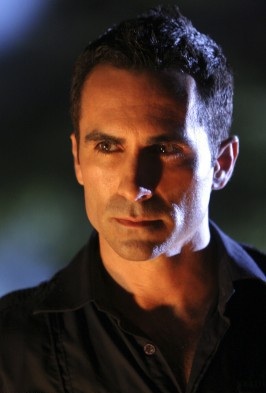
Richard Alpert is an inhabitant of The Island and is the second-in-command of The Others, a group known to the DHARMA Initiative as the "Hostiles." From his first appearance in 1954 to current events on the Island, Richard perpetually appeared to be in his 30s or 40s (making him over 80 years old), though his hairstyle and manner of dress change depending on the circumstances on or off the Island.Or, in the language of The Others (the "language of the enlightened"), Ricardus Alpert. He's the most comfortable in his own skin.
Monday, March 02, 2009
Called to Communion: Reformation meets Rome
Taylor Marshall reports on a new blog:
I've been in touch with a number of Catholics who were once Reformed and we've launched a new site that will examine Reformed/Calvinist theology from a Catholic point of view: Called to Communion. Obviously, our goal is to draw Reformed Christians toward the Catholic Church (ut unum sint), but we aim to avoid theological snobbery.Check it out: Called to Communion.
Sunday, March 01, 2009
On Theological Complementarity
I was recently thinking back to a very intense conversation I once had about seven years ago with an Eastern Catholic concerning the Eastern understanding of original sin. My curiosity was couched in the question of why Eastern Catholics didn't seem to have many of the same theological hang-ups as the Eastern Orthodox with respect to teachings such as the Immaculate Conception. Since an Eastern theology of original sin does not equate original sin with original, hereditary guilt (cf. Augustine), how does the Immaculate Conception even make sense theologically to an Eastern Christian?
Admittedly, however, St. Augustine aside, the Western articulation is not necessarily monolithic, as Fr. Al Kimel discusses here. And our recent Catechism treads very carefully in discussing it (CCC 400-405), leaving some room for diversity in interpretation:
It actually took me some time to embrace this understanding. Many Catholics and Orthodox see such ideas as always being in tension or competition. But this need not be so. And thus has the Church taught, especially in Unitatis Redintegratio from the Second Vatican Council:
Admittedly, however, St. Augustine aside, the Western articulation is not necessarily monolithic, as Fr. Al Kimel discusses here. And our recent Catechism treads very carefully in discussing it (CCC 400-405), leaving some room for diversity in interpretation:
How did the sin of Adam become the sin of all his descendants? The whole human race is in Adam “as one body of one man”. By this “unity of the human race” all men are implicated in Adam’s sin, as all are implicated in Christ’s justice. Still, the transmission of original sin is a mystery that we cannot fully understand.All of that notwithstanding, this Eastern fellow simply explained to me that while the Immaculate Conception as it is commonly understood wouldn't necessarily make sense from an Eastern approach, Eastern Christians in union with the Church of Rome accept the Immaculate Conception fundamentally as it is articulated using a Western theology of original sin. This approach reflects a mutual, theological complementarity between East and West - truly one that breathes with both lungs.
It actually took me some time to embrace this understanding. Many Catholics and Orthodox see such ideas as always being in tension or competition. But this need not be so. And thus has the Church taught, especially in Unitatis Redintegratio from the Second Vatican Council:
What has just been said about the lawful variety that can exist in the Church must also be taken to apply to the differences in theological expression of doctrine. In the study of revelation East and West have followed different methods, and have developed differently their understanding and confession of God's truth. It is hardly surprising, then, if from time to time one tradition has come nearer to a full appreciation of some aspects of a mystery of revelation than the other, or has expressed it to better advantage. In such cases, these various theological expressions are to be considered often as mutually complementary rather than conflicting. Where the authentic theological traditions of the Eastern Church are concerned, we must recognize the admirable way in which they have their roots in Holy Scripture, and how they are nurtured and given expression in the life of the liturgy. They derive their strength too from the living tradition of the apostles and from the works of the Fathers and spiritual writers of the Eastern Churches. Thus they promote the right ordering of Christian life and, indeed, pave the way to a full vision of Christian truth.And moreover, the Church at the Second Vatican Council affirmed that this approach is truly and authentically Catholic:
All this heritage of spirituality and liturgy, of discipline and theology, in its various traditions, this holy synod declares to belong to the full Catholic and apostolic character of the Church. We thank God that many Eastern children of the Catholic Church, who preserve this heritage, and wish to express it more faithfully and completely in their lives, are already living in full communion with their brethren who follow the tradition of the West.Amen to that. This Holy Lent, please join me in praying for Christian unity, particularly among the apostolic churches. Lord, I believe. Help me in my unbelief.
Friday, February 27, 2009
Orthodox in Faith and Catholic in Love
From an interesting (and very brief) interview between Eastern Orthodox author Frederica Mathewes-Green and Fr. Stephen Wojcichowsky, a priest of the Ukrainian Catholic Church and director of the Metropolitan Andrei Sheptytsky Institute for Eastern Christian Studies in Ottawa, Ontaria, Canada. Fr. Stephen discusses (quite generously) the Eastern Catholic approach as it stands between Roman Catholicism and Eastern Orthodoxy:
Listen to the interview on Ancient Faith Radio.
I grew up Ukrainian Catholic and it’s a matter of fact that much of our worship had been laden with Latin elements. But over the course of time, and thanks to our great leadership in our church, we have learned where we have come from. I like the way one of our patriarchs put it, he said “We are Orthodox in Faith and Catholic in love.” In the sense that we are in full communion with the Church in Rome, but at the same time, our faith, our liturgy, the whole ethos of our church is Orthodox. And one priest in Ukraine I asked, “What do you call our church over here?” I was thinking of something else, but he came back and said, “Oh, that’s a very straightforward thing. We’re the Catholic Orthodox. They’re the Orthodox, and we’re the Catholic Orthodox.” And I thought, that really does explain who we are.Certainly, this is a very simple articulation. The history behind this relationship is much more deep and, in some cases, quite divisive within Eastern Catholicism itself. I often reflect on my many discussions with Eastern Catholics from various backgrounds. Very eye-opening. Very hopeful yet disconcerting at the same time.
Listen to the interview on Ancient Faith Radio.
Thursday, February 26, 2009
Lent and BBQ Championships
I confess that I would prefer it if Houston didn't choose to signal the beginning of its annual Rodeo with the World's Championship Bar-B-Que contest, which always happens to be placed right after Lent is in full swing. But they do it every year. One of our neighbors is on a cooking team, and he was able to get some tickets for us a couple of years ago. We waited until Saturday morning to go down, but I'm told Friday night is the best. Not for Lenten Catholics!
Wednesday, February 25, 2009
How the Dominicans came to Santa Sabina
How the Order of Preachers (Dominicans) came to be at the ancient Church of Santa Sabina on the Aventine Hill in Rome.
From the Dominican History blog:
From an interview on Vatican Radio, Feb 24, 2009 with Fr. Robert Ombres, O.P., who tells how the Dominicans came to Santa Sabina and why the Pope visits this Dominican Church on Ash Wednesday. Fr. Robert Ombres, O.P., a son of the English Province, is presently Procurator General of the Order of Preachers, and lives at the Priory of Santa Sabina in Rome.
The Pope at Santa Sabina
New Liturgical Movement describes Ash Wednesday with the Holy Father at the Dominican Church of Santa Sabina in Rome.
Church Fathers Lenten Reading Plan
If you are still looking for something special to do this Lent to improve your spiritual life, why not undertake a reading plan based on writings from the Fathers of the Church. Here's some ideas. Perhaps you can begin each day with a selection from the New Testament.
Tuesday, February 24, 2009
You've Got The Time Houston
Houston Catholics Begin Audio Bible Listening:
Daniel Cardinal DiNardo, Archbishop of Galveston-Houston, recently urged Catholic leaders to get involved in a city-wide Bible listening campaign called You've Got The Time Houston.
Faith Comes By Hearing, the world’s foremost Audio Bible ministry, is coordinating this effort to reach every Houstonian with God’s Word in audio.
Morgan Jackson, international director for Faith Comes By Hearing, says the initial response has been remarkable.
So far more than 50 different parishes have signed up to listen through the entire New Testament, which represents more than 160,000 Catholics.
“The Archdiocese of Galveston-Houston has planned an extensive Bible engagement effort for 2009 called Word of God in the Life and Mission of the Church. Faith Comes By Hearing’s 40-day Bible listening is a big component of their outreach,” said Jackson.
“I believe Cardinal DiNardo’s support of this Bible listening program is an invigorating demonstration of his leadership to Pope Benedict’s declaration of 2009 as The Year of God’s Word,” said Jackson. “His active encouragement of this program is giving many Catholics new opportunities to study the sacred Scriptures, deepen their faith and increase their knowledge of God’s Word.”
“His endorsement is an additional encouragement to many leaders from other denominations,” said Jackson.
Already, leaders from more than 100 other Houston congregations from over a dozen denominations have signed up their churches to listen through the New Testament.
Jackson expects that more than one-third of the 3,000 Houston area churches will participate in this Bible engagement outreach.
Subscribe to:
Posts (Atom)
LinkWithin
