I first received the sacraments of the Church on Saturday, March 29th, 1997 at my home parish of St. Louis de Montfort in Santa Maria, California. I was 18 years old then, but 'twas only yesterday, really. Now I'm 30, and I'm so very happy to be home.
Laudetur Iesus Christus!
Thursday, April 02, 2009

Sunday, March 29, 2009
Jane Wyman: Lay Dominican
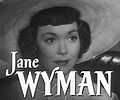
When my pastor told me this morning that he had read that Jane Wyman (ex-wife of President Ronald Reagan) was a Third Order Dominican, I had to look it up myself. She was a convert to the Catholic Church and never remarried after the break-up of her last marriage. Sure enough, she made her profession as a Lay Dominican later in her life and was involved in several charitable causes related to the Church and to the Order. She was buried in the habit of the Order after she died in her sleep in 2007.
Thursday, March 26, 2009
Houston Prayer Vigil Friday Evening
Planned Parenthood is having its national convention here in Houston this weekend. From TexasFamilies.org:
Not only is Planned Parenthood in the process of remodeling what will be the largest abortion center in the Western Hemisphere here in Houston, but they are also having their national convention here the last week of March!The group will gather in the parking lot on Jackson which is directly behind Annunciation Catholic Church at 1618 Texas Ave. at 6:00 PM and walk in a procession. Pro-lifers from every denomination are invited and encouraged to participate.
That means hundreds of Planned Parenthood employees from around the country will be here in Houston.
On Friday March 27th, Planned Parenthood will have their 2009 Gala and Annual Awards ceremony at the George R. Brown Convention Center. They will be honoring Hillary Clinton.
Don't stay home on Friday, March 27th! We need you to join us in a prayer vigil on the sidewalk across the street from the George R. Brown.
Wednesday, March 25, 2009
The Solemnity of the Annunciation

Today, the Dominican Supplement to the Liturgy of the Hours points us to a reading from our dearest sister, Catherine of Siena:
You, O Mary, have been made a book in which our rule is written today. In you today is written the eternal Father’s wisdom; in you today our human strength and freedom are revealed...Fiat mihi secundum Verbum tuum.
O Mary, I see this Word given to you, living in you yet not separated from the Father–just as the word one has in one’s mind does not leave one’s heart or become separated from it even through that word is externalized and communicated to others. In these things our human dignity is revealed–that God should have done such and so great things for us.
And even more in you, O Mary, our human strength and freedom are today revealed, for after the deliberation of such and so great a council, the angel was sent to you to announce to you the mystery of the divine counsel and to seek to know your will, and God’s Son did not come down into your womb until you had given your will’s consent. He waited at the door of your will for you to open to him; for he wanted to come into you, but he would never have entered unless you had opened to him, saying, “Here I am, God’s servant; let it be done to me as you have said.”
The eternal Godhead, O Mary, was knocking at your door, but unless you had opened that door of your will God would not have taken flesh in you. Blush, my soul, when you see that today God has become your relative in Mary. Today you have been shown that even though you were made without your help, you will not be saved without your help.
O Mary, My tenderest love! In you is written the Word, from whom we have the teaching of life. You are the tablet that sets this teaching before us.
Les Misérables
The Theatre Under the Stars (TUTS) in Houston, a local musical theatre production company, is presenting Les Misérables for the first time, and only until April 5th. We had been thinking about going with my reading group, but it doesn't look like it's going to happen. Anyone been?
Ullamaliztli
I suspect that if Football were like the Aztec game of Ullamaliztli, in which the losing team was sacrificed to the gods, then there wouldn't be as much interest in Football anymore. Or perhaps I am wrong?
Sunday, March 22, 2009
Our Lady in Mexico City
Saturday, March 21, 2009
Facebook and "Ambient Awareness"
Over the last few weeks, I have been heavily moderating my experience with Facebook. I have been doing it in order to give myself a sort-of Lenten reflection on social networking and digital intimacy: is it really a positive experience, or is it a meaningless distraction? This type of thing isn't new to me. My friends and I grew up with dial-up bulletin board systems (even ran my own for a while) and chat-boards (I'm not talking about Prodigy or AOL) long before blogs became popular.
Facebook is a strange beast. Before really getting into it, I had really come to question the worth of the micro-blogging phenomenon supported by networking sites such as Facebook and Twitter in which one is encouraged to post brief messages concerning the unimportant minutiae of one's daily life. Yet, I found myself also strangely addicted to it. Clive Thompson of the New York Times asked the same question in an article published last September, "Brave New World of Digital Intimacy":
I myself have been tempted to vent my frustrations in ways I am not always comfortable doing on my blog, particularly recently with the efforts of the Obama Administration to destroy protections on human life. I began to see a picture of myself emerging in which I saw myself as a particularly negative person, prone to outburst, lacking reflection and balance. I am not a hot-headed reactionary, yet I began to understand that this must be how others were beginning to see me, particularly those with whom I did not maintain close contact, something Facebook was designed to remedy. That was my first indication that something was amiss. It also seemed to encourage people to develop erratic opinions about things they really knew nothing about, leading to the temptation to be deliberately provocative and incendiary.
But why the fascination over people's minute-by-minute reports? Thompson continues:
The thrust of Thompson's article seems to be that this type of intimacy is, at its root, good and is getting us back to what's really important about healthy relationships. I'm not yet sure about that. While Facebook is a very good means to keep folks updated on important items, easily share photos, and post links, it also provides a really good distraction from one's own life. Personally, I have found that by distancing myself from it, I have found myself more easily able to do constructive things, whether it be spending time with my wife, or immersing myself in prayer and study. I'll leave it there... for now.
Facebook is a strange beast. Before really getting into it, I had really come to question the worth of the micro-blogging phenomenon supported by networking sites such as Facebook and Twitter in which one is encouraged to post brief messages concerning the unimportant minutiae of one's daily life. Yet, I found myself also strangely addicted to it. Clive Thompson of the New York Times asked the same question in an article published last September, "Brave New World of Digital Intimacy":
In essence, Facebook users didn’t think they wanted constant, up-to-the-minute updates on what other people are doing. Yet when they experienced this sort of omnipresent knowledge, they found it intriguing and addictive. Why?Why, indeed? And what does one do with all of that knowledge?
Social scientists have a name for this sort of incessant online contact. They call it “ambient awareness.” It is, they say, very much like being physically near someone and picking up on his mood through the little things he does — body language, sighs, stray comments — out of the corner of your eye. Facebook is no longer alone in offering this sort of interaction online. In the last year, there has been a boom in tools for “microblogging”: posting frequent tiny updates on what you’re doing. The phenomenon is quite different from what we normally think of as blogging, because a blog post is usually a written piece, sometimes quite long: a statement of opinion, a story, an analysis. But these new updates are something different. They’re far shorter, far more frequent and less carefully considered.Yes, far, far less carefully considered. Writing a blog post takes some time, reflection, and analysis (not including those blogs prone to constant axe-grinding, which I make a point of avoiding and encourage others to do so as well). On the other hand, micro-blogging takes no time at all. I quickly saw how easily the most reasonable people post not only about the meaningless details of the day, but also their many erratic frustrations with the people and events of their life and life in general, including politics and religion. One friend proclaims, "The pope is an idiot!" Another proclaims, "Obama is an idiot!" And another, "Palin is an idiot!" It wears on a person after a while.
I myself have been tempted to vent my frustrations in ways I am not always comfortable doing on my blog, particularly recently with the efforts of the Obama Administration to destroy protections on human life. I began to see a picture of myself emerging in which I saw myself as a particularly negative person, prone to outburst, lacking reflection and balance. I am not a hot-headed reactionary, yet I began to understand that this must be how others were beginning to see me, particularly those with whom I did not maintain close contact, something Facebook was designed to remedy. That was my first indication that something was amiss. It also seemed to encourage people to develop erratic opinions about things they really knew nothing about, leading to the temptation to be deliberately provocative and incendiary.
But why the fascination over people's minute-by-minute reports? Thompson continues:
For many people — particularly anyone over the age of 30 — the idea of describing your blow-by-blow activities in such detail is absurd. Why would you subject your friends to your daily minutiae? And conversely, how much of their trivia can you absorb? The growth of ambient intimacy can seem like modern narcissism taken to a new, supermetabolic extreme — the ultimate expression of a generation of celebrity-addled youths who believe their every utterance is fascinating and ought to be shared with the world. Twitter, in particular, has been the subject of nearly relentless scorn since it went online. “Who really cares what I am doing, every hour of the day?” wondered Alex Beam, a Boston Globe columnist, in an essay about Twitter last month. “Even I don’t care.”"Modern narcissism". I like that description. Posting my opinions gave me a sense of value, as though the details about what I ate for lunch that day were really that interesting. But it adds up:
Indeed, many of the people I interviewed, who are among the most avid users of these “awareness” tools, admit that at first they couldn’t figure out why anybody would want to do this.
Each little update — each individual bit of social information — is insignificant on its own, even supremely mundane. But taken together, over time, the little snippets coalesce into a surprisingly sophisticated portrait of your friends’ and family members’ lives, like thousands of dots making a pointillist painting. This was never before possible, because in the real world, no friend would bother to call you up and detail the sandwiches she was eating. The ambient information becomes like “a type of E.S.P.,” as [Ben] Haley described it to me, an invisible dimension floating over everyday life.And that's just it. People's lives unfold before you like a soap opera. You gain a sense of control even as a silent observer, privy to intimate life details people feel compelled to share. It seems to me that this can be good, but it can also be bad. And what are we to make of the distinction between real "friendship" and "Facebook friends", which for some, seems to be more of a popularity contest than about maintaining solid relationships with other people?
The thrust of Thompson's article seems to be that this type of intimacy is, at its root, good and is getting us back to what's really important about healthy relationships. I'm not yet sure about that. While Facebook is a very good means to keep folks updated on important items, easily share photos, and post links, it also provides a really good distraction from one's own life. Personally, I have found that by distancing myself from it, I have found myself more easily able to do constructive things, whether it be spending time with my wife, or immersing myself in prayer and study. I'll leave it there... for now.
The Slums of Hollywood
Speaking of slumdogs, I was thinking back to 1997 when the unrealistic, contrived, one-dimensional love story called "Titanic" was released. Remember all the hype about Leonardo DiCaprio growing up in the "slums of Hollywood" only to make it as a big moviestar? While I was working in Los Angeles during the summer of 1998, I went to visit a coworker friend of mine from the Archdiocesan chancery office who lived in the East Hollywood/Los Feliz area. Not Beverly Hills, but a pretty nice area -- better than a lot of places in Los Angeles. I later learned that the East Hollywood and Los Feliz area was the "slums of Hollywood" from which DiCaprio emerged. Real rags-to-riches story there.
Slumdog Millionaire
We rarely go to the movie theater nowadays, but after all of the raving about Slumdog Millionaire, we decided to go and check it out this afternoon. We enjoyed it very much. It does have a bit of violence, but I found it to be a good story with good characters. In a strange way, taken as a whole, it was also a fun film.
Of course, before the film started, we were treated to a teaser for Angels and Demons, the next Dan Brown flop, which will be sure to perpetuate more myths concerning the Church's relationship with scientific inquiry and other things. But beware - you may have to fight several albino Opus Dei "monks" that will stand in the way of your journey to truth!
Of course, before the film started, we were treated to a teaser for Angels and Demons, the next Dan Brown flop, which will be sure to perpetuate more myths concerning the Church's relationship with scientific inquiry and other things. But beware - you may have to fight several albino Opus Dei "monks" that will stand in the way of your journey to truth!
Wednesday, March 11, 2009
On Language and Filioque
Reflections on the filioque and language from Fr. Hunwicke, courtesy of Josephus Flavius of Byzantine, Texas. Not a new argument, but something to keep in mind as we observe current developments with other groups:
I do not intend to explain what this is all about ab initio to those who do not already know the general outlines. Just to add some facts which those who do know may not be familiar with.Read the rest of Fr. Hunwicke's reflection.
In 1995 the Pontifical Council for the Promotion of Christian Unity published a learned and interesting paper which suggested that a lack of correlation between the Greek (ekporeuesthai) and Latin (procedere) terms for "proceedeth" is part of the problem. ekporeuesthai refers to the origin of the Holy Spirit within the eternal and glorious economy of the Holy Trinity. And, since the Father is the Source (pege, aitia) of the being of the other two Persons, clearly the Spirit ekporeuetai from the Father alone. To suggest that he might ekporeuesthai from the Son as well is to posit two sources of Divinity and thus, in effect, to believe in two Gods.
Procedere, on the other hand, is a broader term. As well as sharing the meaning of ekporeuesthai, it also encompasses the Sending, within time, of the Spirit by the Son. When the Western Church was battling against Arianism, it seemed important to safeguard the full divinity of the Son by incorporating into the Creed His authentic Missio of the Spirit.
So you could argue that Filioque with ekporeuesthai is gravely erroneous because it is tantamount to polytheism, while procedere without the Filioque is dangerously suggestive of Arianism.
Sunday of Orthodoxy in Houston
Houston Orthodox priest Fr. Joseph Huneycutt (of the Houston blog ORTHODIXIE) has a report on his blog about the Sunday of Orthodoxy in Houston. Sunday of Orthodoxy Vespers was spent this year at Holy Forty Martyrs Mission (Antiochian Orthodox) here in Sugar Land.
Batman in Santa Barbara
One of the best scenes in motion picture history was filmed at Stearn's Wharf in Santa Barbara in the late 1960's:
"Some days you just can't get rid of a bomb!"
"Some days you just can't get rid of a bomb!"
Friday, March 06, 2009
Your favorite "Lost" character?
Mine happens to be the age-defying Richard Alpert, the mysterious second-in-command of The Others:

Richard Alpert is an inhabitant of The Island and is the second-in-command of The Others, a group known to the DHARMA Initiative as the "Hostiles." From his first appearance in 1954 to current events on the Island, Richard perpetually appeared to be in his 30s or 40s (making him over 80 years old), though his hairstyle and manner of dress change depending on the circumstances on or off the Island.Or, in the language of The Others (the "language of the enlightened"), Ricardus Alpert. He's the most comfortable in his own skin.
Monday, March 02, 2009
Called to Communion: Reformation meets Rome
Taylor Marshall reports on a new blog:
I've been in touch with a number of Catholics who were once Reformed and we've launched a new site that will examine Reformed/Calvinist theology from a Catholic point of view: Called to Communion. Obviously, our goal is to draw Reformed Christians toward the Catholic Church (ut unum sint), but we aim to avoid theological snobbery.Check it out: Called to Communion.
Sunday, March 01, 2009
On Theological Complementarity
I was recently thinking back to a very intense conversation I once had about seven years ago with an Eastern Catholic concerning the Eastern understanding of original sin. My curiosity was couched in the question of why Eastern Catholics didn't seem to have many of the same theological hang-ups as the Eastern Orthodox with respect to teachings such as the Immaculate Conception. Since an Eastern theology of original sin does not equate original sin with original, hereditary guilt (cf. Augustine), how does the Immaculate Conception even make sense theologically to an Eastern Christian?
Admittedly, however, St. Augustine aside, the Western articulation is not necessarily monolithic, as Fr. Al Kimel discusses here. And our recent Catechism treads very carefully in discussing it (CCC 400-405), leaving some room for diversity in interpretation:
It actually took me some time to embrace this understanding. Many Catholics and Orthodox see such ideas as always being in tension or competition. But this need not be so. And thus has the Church taught, especially in Unitatis Redintegratio from the Second Vatican Council:
Admittedly, however, St. Augustine aside, the Western articulation is not necessarily monolithic, as Fr. Al Kimel discusses here. And our recent Catechism treads very carefully in discussing it (CCC 400-405), leaving some room for diversity in interpretation:
How did the sin of Adam become the sin of all his descendants? The whole human race is in Adam “as one body of one man”. By this “unity of the human race” all men are implicated in Adam’s sin, as all are implicated in Christ’s justice. Still, the transmission of original sin is a mystery that we cannot fully understand.All of that notwithstanding, this Eastern fellow simply explained to me that while the Immaculate Conception as it is commonly understood wouldn't necessarily make sense from an Eastern approach, Eastern Christians in union with the Church of Rome accept the Immaculate Conception fundamentally as it is articulated using a Western theology of original sin. This approach reflects a mutual, theological complementarity between East and West - truly one that breathes with both lungs.
It actually took me some time to embrace this understanding. Many Catholics and Orthodox see such ideas as always being in tension or competition. But this need not be so. And thus has the Church taught, especially in Unitatis Redintegratio from the Second Vatican Council:
What has just been said about the lawful variety that can exist in the Church must also be taken to apply to the differences in theological expression of doctrine. In the study of revelation East and West have followed different methods, and have developed differently their understanding and confession of God's truth. It is hardly surprising, then, if from time to time one tradition has come nearer to a full appreciation of some aspects of a mystery of revelation than the other, or has expressed it to better advantage. In such cases, these various theological expressions are to be considered often as mutually complementary rather than conflicting. Where the authentic theological traditions of the Eastern Church are concerned, we must recognize the admirable way in which they have their roots in Holy Scripture, and how they are nurtured and given expression in the life of the liturgy. They derive their strength too from the living tradition of the apostles and from the works of the Fathers and spiritual writers of the Eastern Churches. Thus they promote the right ordering of Christian life and, indeed, pave the way to a full vision of Christian truth.And moreover, the Church at the Second Vatican Council affirmed that this approach is truly and authentically Catholic:
All this heritage of spirituality and liturgy, of discipline and theology, in its various traditions, this holy synod declares to belong to the full Catholic and apostolic character of the Church. We thank God that many Eastern children of the Catholic Church, who preserve this heritage, and wish to express it more faithfully and completely in their lives, are already living in full communion with their brethren who follow the tradition of the West.Amen to that. This Holy Lent, please join me in praying for Christian unity, particularly among the apostolic churches. Lord, I believe. Help me in my unbelief.
Friday, February 27, 2009
Orthodox in Faith and Catholic in Love
From an interesting (and very brief) interview between Eastern Orthodox author Frederica Mathewes-Green and Fr. Stephen Wojcichowsky, a priest of the Ukrainian Catholic Church and director of the Metropolitan Andrei Sheptytsky Institute for Eastern Christian Studies in Ottawa, Ontaria, Canada. Fr. Stephen discusses (quite generously) the Eastern Catholic approach as it stands between Roman Catholicism and Eastern Orthodoxy:
Listen to the interview on Ancient Faith Radio.
I grew up Ukrainian Catholic and it’s a matter of fact that much of our worship had been laden with Latin elements. But over the course of time, and thanks to our great leadership in our church, we have learned where we have come from. I like the way one of our patriarchs put it, he said “We are Orthodox in Faith and Catholic in love.” In the sense that we are in full communion with the Church in Rome, but at the same time, our faith, our liturgy, the whole ethos of our church is Orthodox. And one priest in Ukraine I asked, “What do you call our church over here?” I was thinking of something else, but he came back and said, “Oh, that’s a very straightforward thing. We’re the Catholic Orthodox. They’re the Orthodox, and we’re the Catholic Orthodox.” And I thought, that really does explain who we are.Certainly, this is a very simple articulation. The history behind this relationship is much more deep and, in some cases, quite divisive within Eastern Catholicism itself. I often reflect on my many discussions with Eastern Catholics from various backgrounds. Very eye-opening. Very hopeful yet disconcerting at the same time.
Listen to the interview on Ancient Faith Radio.
Thursday, February 26, 2009
Lent and BBQ Championships
I confess that I would prefer it if Houston didn't choose to signal the beginning of its annual Rodeo with the World's Championship Bar-B-Que contest, which always happens to be placed right after Lent is in full swing. But they do it every year. One of our neighbors is on a cooking team, and he was able to get some tickets for us a couple of years ago. We waited until Saturday morning to go down, but I'm told Friday night is the best. Not for Lenten Catholics!
Wednesday, February 25, 2009
How the Dominicans came to Santa Sabina
How the Order of Preachers (Dominicans) came to be at the ancient Church of Santa Sabina on the Aventine Hill in Rome.
From the Dominican History blog:
From an interview on Vatican Radio, Feb 24, 2009 with Fr. Robert Ombres, O.P., who tells how the Dominicans came to Santa Sabina and why the Pope visits this Dominican Church on Ash Wednesday. Fr. Robert Ombres, O.P., a son of the English Province, is presently Procurator General of the Order of Preachers, and lives at the Priory of Santa Sabina in Rome.
The Pope at Santa Sabina
New Liturgical Movement describes Ash Wednesday with the Holy Father at the Dominican Church of Santa Sabina in Rome.
Church Fathers Lenten Reading Plan
If you are still looking for something special to do this Lent to improve your spiritual life, why not undertake a reading plan based on writings from the Fathers of the Church. Here's some ideas. Perhaps you can begin each day with a selection from the New Testament.
Tuesday, February 24, 2009
You've Got The Time Houston
Houston Catholics Begin Audio Bible Listening:
Daniel Cardinal DiNardo, Archbishop of Galveston-Houston, recently urged Catholic leaders to get involved in a city-wide Bible listening campaign called You've Got The Time Houston.
Faith Comes By Hearing, the world’s foremost Audio Bible ministry, is coordinating this effort to reach every Houstonian with God’s Word in audio.
Morgan Jackson, international director for Faith Comes By Hearing, says the initial response has been remarkable.
So far more than 50 different parishes have signed up to listen through the entire New Testament, which represents more than 160,000 Catholics.
“The Archdiocese of Galveston-Houston has planned an extensive Bible engagement effort for 2009 called Word of God in the Life and Mission of the Church. Faith Comes By Hearing’s 40-day Bible listening is a big component of their outreach,” said Jackson.
“I believe Cardinal DiNardo’s support of this Bible listening program is an invigorating demonstration of his leadership to Pope Benedict’s declaration of 2009 as The Year of God’s Word,” said Jackson. “His active encouragement of this program is giving many Catholics new opportunities to study the sacred Scriptures, deepen their faith and increase their knowledge of God’s Word.”
“His endorsement is an additional encouragement to many leaders from other denominations,” said Jackson.
Already, leaders from more than 100 other Houston congregations from over a dozen denominations have signed up their churches to listen through the New Testament.
Jackson expects that more than one-third of the 3,000 Houston area churches will participate in this Bible engagement outreach.
Thursday, February 19, 2009
Preparing Athonite Prosphora

Sylvia at Adventures of an Orthodox Mom describes how to bake prosphora (bread used for Orthodox liturgies) as it is made at Mount Athos and the Athonite monasteries.
We use something called "prozimi" instead of yeast to make the bread rise. Prozimi itself is a miracle. On either September 14 (Exaltation of the Precious Cross) or on Holy Friday a bowl containing only water and flour is taken into the altar during the Gospel reading. The priest then blesses it. Afterwards our Gerondissa takes it into the kitchen and places it in the oven (the oven is not on) and leaves it there overnight. The next morning the bowl is overflowing with this "yeast". It is then separated and refrigerated in airtight containers and is used each time prosphoro is made. Every time you make a new batch of dough you tear a small piece off and set aside for next time.Check out the full recipe, complete with pictures. Almost reminds me of my Eucharistic bread recipe adventures from a few years ago.
(H/T Byzantine, Texas)
Let's Reinstate Communal Confession
Now, for a little levity and satire... The Onion Dome has it down:
After his earlier attempts at raising the level of spiritual life in his parish, Catechumen Vasileos (formerly Vasily, aka William, aka Guillaume, etc) wondered what more he could do to eliminate the "rampant heathenry" that he found in his parish. In his intense studies of Church history, including A Beginner's Guide to the Orthodox Church and The Early Church for Dummies, Catechumen Vasileos discovered yet another thing in his parish which didn't match up with the early church: Private confession.I think I've seen this guy's twin in Catholic circles as well ;)
"Private confession is so obviously a heretical papist latinist pan-hereticalist innovation," said Catechumen Vasileos in a recent interview, "And obviously, we can't have that!"
Thus, having identified himself as the only real true Orthodox believe in this parish of "ignorant, uneducated heathens," Catechumen Vasileos decided to heed the advice of 6th century Elder Pharmaxananos who said, "The man who can condemn sin is by far the most blessed," and help his fellow parishioners on the way to true, non-papist repentance...
To start, Catechumen Vasileos distributed information in his parish about the practice of the early Church, in which everyone confessed to each other, rather than just to the priest. He even set a date for everyone to come and confess to each other. However, when that day came, he was quite saddened to discover that no one showed up.
"Clearly, no one at my parish really cares about Orthodoxy. They don't care about repentance, they are too busy at 6pm on Wednesday evening to come to the real confession, to busy doing useless worldly things like caring for their children, working, or something stupid like that. Really, these people just have no idea what the spiritual life is like."
Catechumen Vasileos decided to take it a step further: He decided that the best way to "convict the heathens of their sins" was to do what Elder Pharmaxananos advised, and show them. And since all sins are public, he reasoned, everyone should know! Thus, Catechumen Vasileos compiled a list of sins for everyone in the parish to pass out before liturgy.
What was on the list? To quote just two items:* Alicia was spotted on July 13th at a Roman Catholic soup kitchen, helping make food for the homeless. This is clearly in violation of Canon 422 of the Synaxalion Council of Bypraxia in 1332, which forbids any contact with heretics. This woman is surely straight on the path to eternal damnation in the 13th hell, reserved for Romanist sympathizers, which we know about from the Revelation to St Phylergia of 18th century Calamaria.After having passed out his lists after Divine Liturgy last Sunday, no comment could be obtained as to the success of his efforts at bringing the parish to repentance, as Catechumen Vasileos is in the hospital with mysterious cane-shaped bruises all over his body, and an interesting loss of hearing, possibly caused by being exposed to prolonged, high-volume screaming at the hands of elderly Calamarian women.
* Zossimas was seen eating at restaurant with his mistress on a Wednesday eating meat during Lent! First off, it's Wednesday, what is he doing eating meat?? Second, it's Lent, why is he engaging in worldly activities like eating at restaurants? This man seriously needs some help with following the canons. This is just such a blatant violation, like seriously. People really need to conduct themselves in a more canonical way when on dates with their mistresses. His wife is such a pious woman too, I am sure she will be filled with godly rage when she hears that her husband was not keeping the holy fasts of the Church.
Tuesday, February 17, 2009
Aquinas vs. Intelligent Design
The eminent Francis Beckwith points us to a very good essay by Professor Michael W. Tkacz, published last year by This Rock magazine, entitled Aquinas vs. Intelligent Design. Tkacz makes a number of good points with respect to a Thomistic point of view, some points which I have been attempting to articulate (lacking background, skill, credibility, experience, etc) for some time:
Both Darwinism, with its secular challenge to the unity of faith and reason, as well as the attempt of ID theorists to disprove evolutionary theory vindicate Pope Leo’s selection of Aquinas as the model for Catholic intellectuals. Thomism has something useful and corrective to say on both sides of the debate. At the same time, Thomism does not replace the natural sciences, or perhaps to put it better, a Thomistic intellectual synthesis includes precisely the sort of research found in the modern natural sciences that have produced so much understanding of nature. In the Thomistic view, the teachings of the faith are fully compatible with what we learn of nature through scientific research, provided we both understand those divine teachings correctly and we do our scientific research consistently and rigorously. The truth or falsity of the claim that the diversity of living species is due to some sort of evolutionary process is a matter to be settled through biological research. Whatever the outcome of this research, it can never replace the need to explain the existence of the natural world in terms of a creation ex nihilo according to God’s divine design.What does this mean for Intelligent Design? He continues (emphasis mine):
Clearly, the secular claims associated with modern Darwinism require the sort of corrective provided by Thomism. Does this mean, then, that Catholics should make common cause with ID advocates? Insofar as ID theory represents a "god of the gaps" view, then it is inconsistent with the Catholic intellectual tradition. Thanks to the insights of Aquinas and his many followers throughout the ages, Catholics have available to them a clearer and more consistent understanding of Creation. If Catholics avail themselves of this Thomistic tradition, they will have no need to resort to "god of the gaps" arguments to defend the teachings of the faith. They will also have a more complete and harmonious understanding of the relationship of the Catholic faith to scientific reason.I, too, think this approach is best when we are dealing with the abiding secularism and, indeed, atheism that is rampant in the modern, scientific world.
Sunday, February 15, 2009
Gregorian Chant Workshop in Sugar Land
The New Liturgical Movement blog mentions my parish in Sugar Land and the Gregorian Chant workshop held there this weekend. On Friday evening, my parish schola sang William Byrd's Mass for Four Voices, one of my favorites. My wife is a member of the schola, and I know it took quite a lot of preparation to sing, but they did a very good job. I couldn't attend the actual workshop, but my wife tells me it was intense. I did get the opportunity to have dinner with a few of the folks after Friday's concert, including Scott Turkington of the Church Music Association of America who led the workshop. Lots of smart people!
The Great Entrance
From the Divine Liturgy of St. John Chrysostom. The prayer of the priest at the Great Entrance, prayed in low voice while the people sing the Cherubic Hymn:
No one bound by worldly desires and pleasures is worthy to approach, draw near or minister to You, the King of glory. To serve You is great and awesome even for the heavenly powers. But because of Your ineffable and immeasurable love for us, You became man without alteration or change. You have served as our High Priest, and as Lord of all, and have entrusted to us the celebration of this liturgical sacrifice without the shedding of blood. For You alone, Lord our God, rule over all things in heaven and on earth. You are seated on the throne of the Cherubim, the Lord of the Seraphim and the King of Israel. You alone are holy and dwell among Your saints. You alone are good and ready to hear. Therefore, I implore You, look upon me, Your sinful and unworthy servant, and cleanse my soul and heart from evil consciousness. Enable me by the power of Your Holy Spirit so that, vested with the grace of priesthood, I may stand before Your holy Table and celebrate the mystery of Your holy and pure Body and Your precious Blood. To You I come with bowed head and pray: do not turn Your face away from me or reject me from among Your children, but make me, Your sinful and unworthy servant, worthy to offer to You these gifts. For You, Christ our God, are the Offerer and the Offered, the One who receives and is distributed, and to You we give glory, together with Your eternal Father and Your holy, good and life giving Spirit, now and forever and to the ages of ages. Amen.
Retraite dans la Ville
Ad spot for the Dominican Province of France's online Lenten Retreat: Retraite dans la Ville:
Take the time...
(Courtesy of the Dominican House of Studies, Washington D.C.)
Take the time...
(Courtesy of the Dominican House of Studies, Washington D.C.)
Friday, February 13, 2009
Laudare, Benedicere, Praedicare
The Dominican motto Laudare, Benedicere, Praedicare (to praise, to bless, to preach) actually derives from the Preface of the Blessed Virgin Mary in the Dominican Missal, as shown for the Feast of the Assumption below:
The same phrase can also be found in the Preface for the Prophet Elias in the Carmelite Missal:
Vere dignum et justum est, aequum salutare: Nos tibi semper et ubique gratias agere, Domine, sancte, Pater omnipotens, aeterne Deus. Et te in Assumptione beatae Maria semper Virginis exultantibus animis *** laudare, benedicere, et praedicare ***. Quae et unigenitum tuum Sancti Spiritus obumbratione concepit, et virginitatis gloria permanente, mundo lumen aeternum effudit, Iesum Christum Dominum nostrum. Per quem maiestatem tuam laudant angeli, adorant dominationes, tremunt potestates: caeli caelorumque virtutes ac beata seraphim socia exultatione concelebrant. Cum quibus et nostras voces ut admitti iubeas, deprecamur, supplici confessione dicentes: Sanctus, Sanctus, Sanctus, etc...Fr. Augustine Thompson O.P., a Dominican Rite scholar, notes on Lauren's blog that the Dominican preface is a medieval, northern French variation on the Roman, which uses collaudare.
The same phrase can also be found in the Preface for the Prophet Elias in the Carmelite Missal:
Vere dignum et justum est, aequum et salutare, nos tibi semper et ubique gratias agere: Domine sancte Pater omnipotens aeterne Deus: Et te in Solemnitate (Veneratione) beati Eliae, Prophetae tui et Patris nostri, exsultantibus animis *** laudare, benedicere et praedicare ***...Most likely from a similar variant of the Roman missal. Anyone know the history behind the Carmelite preface?
Thursday, February 12, 2009
Conference on Biological Evolution
This is a couple of days old, but from VIS:
In the Holy See Press Office this morning, the presentation took place of an international conference entitled: "Biological Evolution: Facts and Theories. A critical appraisal 150 years after 'The Origin of Species'". The event is due to take place in Rome from 3 to 7 March.A more detailed description of the event:
Archbishop Ravasi pointed out that the forthcoming congress responds to the need "to re-establish dialogue between science and faith, because neither of them can fully resolve the mystery of human beings and the universe".How awesome!! The contemporary debate illustrates quite well the tension as well as the synergy of faith and reason in the public sphere. Atheism, which would deny faith, would have us misapply important, scientific theories in a way that would attempt to exclude God (an unscientific claim). Meanwhile, a dangerous fundamentalism, which would deny the applicability of reason, would seek to jerk it in the other direction in a way that would attempt to reject the plausibility of simple, scientific observations and theories about what they indicate. Both positions are extremely dangerous. The Catholic christian would instead look at the evidence and what it tells us (and, what it doesn't tell us) and still ask: What is this based on? How can what we know and don't know about biological evolution be subject to what we understand about God, the Creator of the universe? For the Christian, the foundation is still the same.
For his part Fr. Leclerc explained that the congress will be divided into nine sessions, focusing on "the essential facts upon which the theory of evolution rests, facts associated with palaeontology and molecular biology; ... the scientific study of the mechanisms of evolution, ... and what science has to say about the origin of human beings". Attention will also be given to "the great anthropological questions concerning evolution, ... and the rational implications of the theory for the epistemological and metaphysical fields and for the philosophy of nature". Finally, he said, "there will be two theological sessions to study evolution from the point of view of Christian faith, on the basis of a correct exegesis of the biblical texts that mention the creation, and of the reception of the theory of evolution by the Church".
Saverio Forastiero observed that "the relative fluidity of contemporary evolutionary theory is largely due to a series of discoveries made in the last quarter of a century, discoveries which require the synthetic theory to be reconfigured and could lead to a theory of evolution of the third generation".
"It is my view", he went on, "that this congress represents an opportunity, neither propagandistic nor apologetic, for scientists, philosophers and theologians to meet and discuss the fundamental questions raised by biological evolution - which is assumed and discussed as a fact beyond all reasonable doubt - in order to examine its manifestations and causal mechanisms, and to analyse the impact and quality of the explanatory theories thus far proposed".
Tuesday, February 10, 2009
Greek Orthodox in Santa Barbara

Saint Barbara Greek Orthodox Church, Santa Barbara, California
Saint Barbara's is one of my all-time favorite churches in Santa Barbara. For some reason, I was reflecting on the place tonight. The photo above was taken at (Orthodox) Easter, 2003. I visited this church for the first time back in November 1997 with Bill for an Environmental Symposium the church hosted for the visit of Ecumenical Patriarch Bartholomew of Constantinople. I was a greenhorn Catholic back then, and at the time, I'm not sure that I was able to fully appreciate the significance of the event, but I was glad I went. One unique feature of the church is that they have available for veneration a holy relic of St. Barbara given to them as a gift from Pope John Paul II back in 1987.
The value of a Catholic Education...
... is not a matter of being taught math and history by priests and nuns, as some mistakenly think it is. It's really about forming the mind simultaneously with the soul, at least in principle.
I've been meaning to post about this for a few months. The following is from the principal's column in my high school's October newsletter concerning Catholic schools:
After I graduated, the school went downhill fast with severe administration problems and, I'm sorry to say, really bad hiring decisions. However, over the last few years, they have made a decent comeback and have really attempted to assert their Christian identity in the community. The current principal's attitude is further proof of that renewed attitude.
I've been meaning to post about this for a few months. The following is from the principal's column in my high school's October newsletter concerning Catholic schools:
Catholic schools have traditionally provided excellent college preparatory training, and routinely produce some of the top students in the country each year...Get that? And now it gets interesting:
Catholic schools, because they are usually smaller and can better individualize the educational experience for their students, are sometimes viewed (especially in urban areas) as safer environments in which to receive an education. If you have chosen St. Joseph High School for any of these reasons, I am sorry to say you have chosen it for the wrong reason.
The mission of Catholic education is unique, and the call to ministry in Catholic schools sets teachers and staff members apart from those who work in other places. Catholic Bishops regard Catholic schools as “an essential ministry of the Catholic Church”, so when the Archdiocese of Los Angeles decided to start a Catholic high school in the Santa Maria Valley, it did so to enhance the spiritual enlightenment of our students through the teaching of Catholic doctrine and not for any other reasons. Fr. Ed often reminds our students that “it doesn’t matter if you get in to Harvard if you don’t get in to heaven.” Similarly, it doesn’t matter if you get a full ride football scholarship to USC, if you don’t know right from wrong. If you are content in languishing in the safety and security of a school like St. Joseph, but you haven’t opened your heart enough to concern yourself with the health and well-being of the rest of humankind, then your education has failed you.I was very happy to see this. My experience at St. Joseph was instrumental in my embrace of the Catholic Faith. It had its share of problems, but I constantly thank God for my time there. The extent of what I received there is still being realized even today.
When it comes to helping students to develop their spirituality and to building closer faith relationships with God, certainly not all of our students “get it” right away. But we as Catholic educators are about the business of planting spiritual seeds, seeds that may take a long time to germinate, but seeds that will grow and flower sometimes long after we are gone. It is that potential to develop young people who will become better human beings sooner or maybe later, that is the reason that Catholic schools exist. This is what Archbishop Oscar Romero was saying when he wrote,“We accomplish in our lifetime only a fraction of the magnificent enterprise that is God’s work... We plant seeds that will one day grow. We water seeds already planted, knowing that they hold future promise… We may never see the end results… We are prophets of a future not our own.”I am hoping this is the reason that you chose St. Joseph High School for your child. We know that St. Joseph provides its students with a great education in a fun-filled and safe environment, but we also know that is not the reason we exist, and it is our collective job to remind others what is the real reason.
After I graduated, the school went downhill fast with severe administration problems and, I'm sorry to say, really bad hiring decisions. However, over the last few years, they have made a decent comeback and have really attempted to assert their Christian identity in the community. The current principal's attitude is further proof of that renewed attitude.
Monday, February 09, 2009
The Mass Stipend
Hugo, who blogs over at Seventh-day Adventist to Roman Catholic, responds to the question: The Mass "Stipend": Is it Wrong? Check it out.
Sunday, February 08, 2009
Is there still room for God?
In my days at the university, and also in my current profession, I have often encountered ridicule of Christian assertions or beliefs about the role of Faith and its pertinence to Science. Typically, this was done by the false assertion that the role of faith was only useful to explain what could not presently be explained by science. The "God of the gaps" argument. Wikipedia has a nice summary:
I argue that an authentically Catholic approach must reject such a "God of the gaps" argument. Why? Because it isn't Catholic. God is not a God beyond nature. God is a God of nature, of Creation. After all, it was the very Catholic articulation of the balance between faith and reason that inspired some of the greatest scientific contributions in western civilization, many made by Catholic priests. Mendel and genetics, Clavius and the calendar, Grimaldi and optics, LeMaître and the Big Bang, Copernicus and heliocentrism, and yes, even Galileo. We love science - honest science - and the scientific method.
Contrary to the notion of a stop-gap God, for whom there remains little or no room, the Catholic holds up the exact opposite: the Creator who upholds the universe. For the believer, our comprehension of science only further demonstrates His existence because creation is imbued with intelligibility. The universe is rational. It is reasonable, spoken into existence by the very Word of our Creator. And reason, balanced with faith, is a gift that has been given to us.
Pope Benedict XVI recently said of Galileo:
The God of the gaps refers to a view of God deriving from a theistic position in which anything that can be explained by human knowledge is not in the domain of God, so the role of God is therefore confined to the 'gaps' in scientific explanations of nature. The concept involves an interaction of religious explanations of nature with those derived from science. Within the traditional theistic view of God as existing in a realm "beyond nature," as science progresses to explain more and more, the perceived scope of the role of God tends to shrink as a result.I have known a lot of Christians who felt painted into a corner over this. Yet, science, per se, is not an enemy to faith.
I argue that an authentically Catholic approach must reject such a "God of the gaps" argument. Why? Because it isn't Catholic. God is not a God beyond nature. God is a God of nature, of Creation. After all, it was the very Catholic articulation of the balance between faith and reason that inspired some of the greatest scientific contributions in western civilization, many made by Catholic priests. Mendel and genetics, Clavius and the calendar, Grimaldi and optics, LeMaître and the Big Bang, Copernicus and heliocentrism, and yes, even Galileo. We love science - honest science - and the scientific method.
Contrary to the notion of a stop-gap God, for whom there remains little or no room, the Catholic holds up the exact opposite: the Creator who upholds the universe. For the believer, our comprehension of science only further demonstrates His existence because creation is imbued with intelligibility. The universe is rational. It is reasonable, spoken into existence by the very Word of our Creator. And reason, balanced with faith, is a gift that has been given to us.
Pope Benedict XVI recently said of Galileo:
The great Galileo said that God wrote the book of nature in the form of the language of mathematics. He was convinced that God has given us two books: the book of Sacred Scripture and the book of nature. And the language of nature – this was his conviction – is mathematics, so it is a language of God, a language of the Creator.In his book, Chance or Purpose: Creation, Evolution, and a Rational Faith, Christoph Cardinal Schönborn, O.P. summarizes it thusly in the chapter titled, He upholds the universe by his word of power (Heb. 1:3):
A great deal that was previously incomprehensible in natural processes, because we did not know how to explain it, can be explained today through scientific research and has thereby become comprehensible... The more that is explained, the less there remains that is inexplicable. Is the "room" for God becoming steadily "smaller"? It is no wonder that Der Spiegel closes the article ["God versus Darwin: a religious war over evolution"] with the words, "It's becoming cramped for the creator."Indeed, that is the question we should be asking. And this is why it is false to assert that only science and reason alone are enough or sufficient for man or for civilization. After all, science can also be used to justify extraordinary horrors and offenses against the dignity of the human person.
Yet belief in the Creator does not begin at the point where we do not yet know something, but precisely where we do know very well. The proper approach is to look at what we already know today. That, thank God, is a great deal. We are not looking where there is still something unexplained to see if there is still room for God, but looking at what we know and asking, "What is this based on?"
I held not a broom...
Today, we observed the World Day of Consecrated Life. I found myself this morning back at the Co-Cathedral of the Sacred Heart in downtown Houston for Sunday mass celebrated by Cardinal DiNardo. The mass also served to honor those who have given themselves to God in consecrated life. I was there primarily under an invitation given to our group of Dominican Laity to support our religious promoter, who had been invited to preach the homily. Later in the afternoon, I met with my Lay Dominican group for an extraordinary and very necessary meeting.
The homily started and ended around the humble example of St. Martin de Porres, as particularly exhibited by a statue in the courtyard of Holy Rosary parish in Houston. In the statue, Martin clutches, with one hand, the crucifix of Our Lord close to his heart, and in his other hand, he holds a broom -- the broom of his service as keeper of the priory. For Martin, all work was sacred, however menial. Martin's embrace of poverty and his embrace of the dignity of work (both seemingly counter cultural today) were essential to his vocation and his witness, not only as a religious cooperator brother for those in consecrated life, but to all who witness in the world today. It is in this dignity of holy work, offered to God in humility and transformed by Him, that we witness the extraordinary grace at work within ordinary life. Martin held a broom in one hand and preached Christ and Him Crucified from his heart. Martin's work, and indeed his very life, preached Christ.
Some of us are called to professions that may not include a broom, but let us still strive to cling to that Cross, holding it always to our hearts, as we go about our work and our daily activities -- living out that grace in the good works God has prepared for us to live. If we do that, our work, our very lives, will indeed preach, just as Martin's did.
The homily started and ended around the humble example of St. Martin de Porres, as particularly exhibited by a statue in the courtyard of Holy Rosary parish in Houston. In the statue, Martin clutches, with one hand, the crucifix of Our Lord close to his heart, and in his other hand, he holds a broom -- the broom of his service as keeper of the priory. For Martin, all work was sacred, however menial. Martin's embrace of poverty and his embrace of the dignity of work (both seemingly counter cultural today) were essential to his vocation and his witness, not only as a religious cooperator brother for those in consecrated life, but to all who witness in the world today. It is in this dignity of holy work, offered to God in humility and transformed by Him, that we witness the extraordinary grace at work within ordinary life. Martin held a broom in one hand and preached Christ and Him Crucified from his heart. Martin's work, and indeed his very life, preached Christ.
Some of us are called to professions that may not include a broom, but let us still strive to cling to that Cross, holding it always to our hearts, as we go about our work and our daily activities -- living out that grace in the good works God has prepared for us to live. If we do that, our work, our very lives, will indeed preach, just as Martin's did.
Subscribe to:
Comments (Atom)
LinkWithin

